How to Clean & Protect a Vintage Leather Steering Wheel
A practical guide to clean & protect leather steering wheels – without sanding away the miles they’ve lived.
by Mads – Last updated April 2026

Leather steering wheels don’t really get dirty.
They age.
Slowly. Quietly. Layer by layer.
And unlike synthetic materials, leather doesn’t just collect use — it absorbs it. Heat. Cold. UV light. Hands. Years.
At some point, every leather steering wheel reaches the same question:
Do you clean it — or do you start interfering with its history?
Some links may be affiliate links. I may earn a small commission at no extra cost to you.
The truth about leather
A leather steering wheel is not high-maintenance because it gets dirty easily.
It’s high-maintenance because it dries out.
Modern leather can survive a lot. Vintage leather can’t.
Especially in cars that have seen 20, 30, 40 years of sun, wind, and temperature cycles.
What starts as a soft, slightly glossy surface slowly turns into something dry, hard, and fragile.
And once leather loses its oils, it doesn’t ask for cleaning anymore.
It asks for rescue.
Cleaning is not the main job
Most people think the process is:
clean → done
But that’s only the first layer.
The real work is what comes after.
Because cleaning alone does nothing if the material is already starving.
That’s where most steering wheels slowly fail — not because they were dirty, but because nobody ever fed them again.
What you need
Nothing exotic.
Just the right order.
- Microfiber cloths
- Leather cleaner (mild, pH-balanced)
- Leather conditioner
- Leather protectant or wax-based seal
That’s it.
No aggressive chemicals. No shortcuts. No “stronger is better”.
Leather doesn’t respond to force.
It responds to consistency.
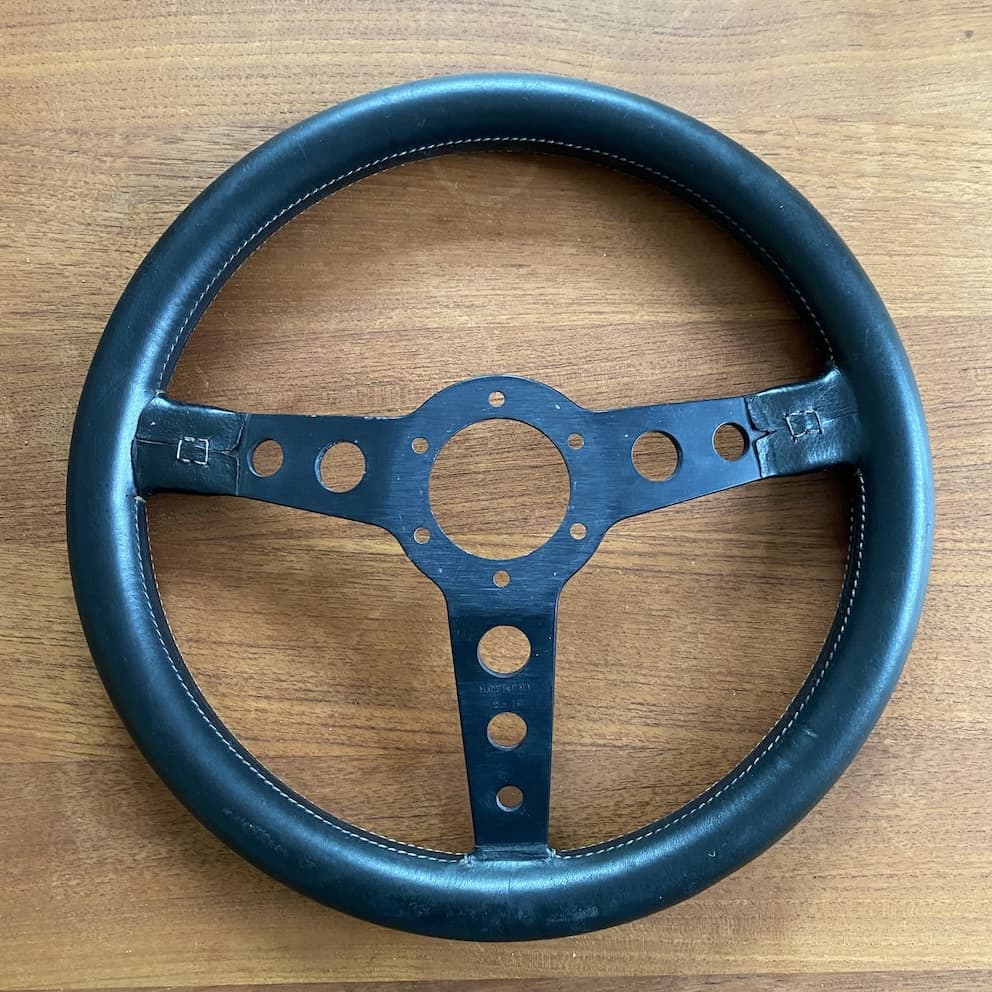
Step 1 – Cleaning the surface
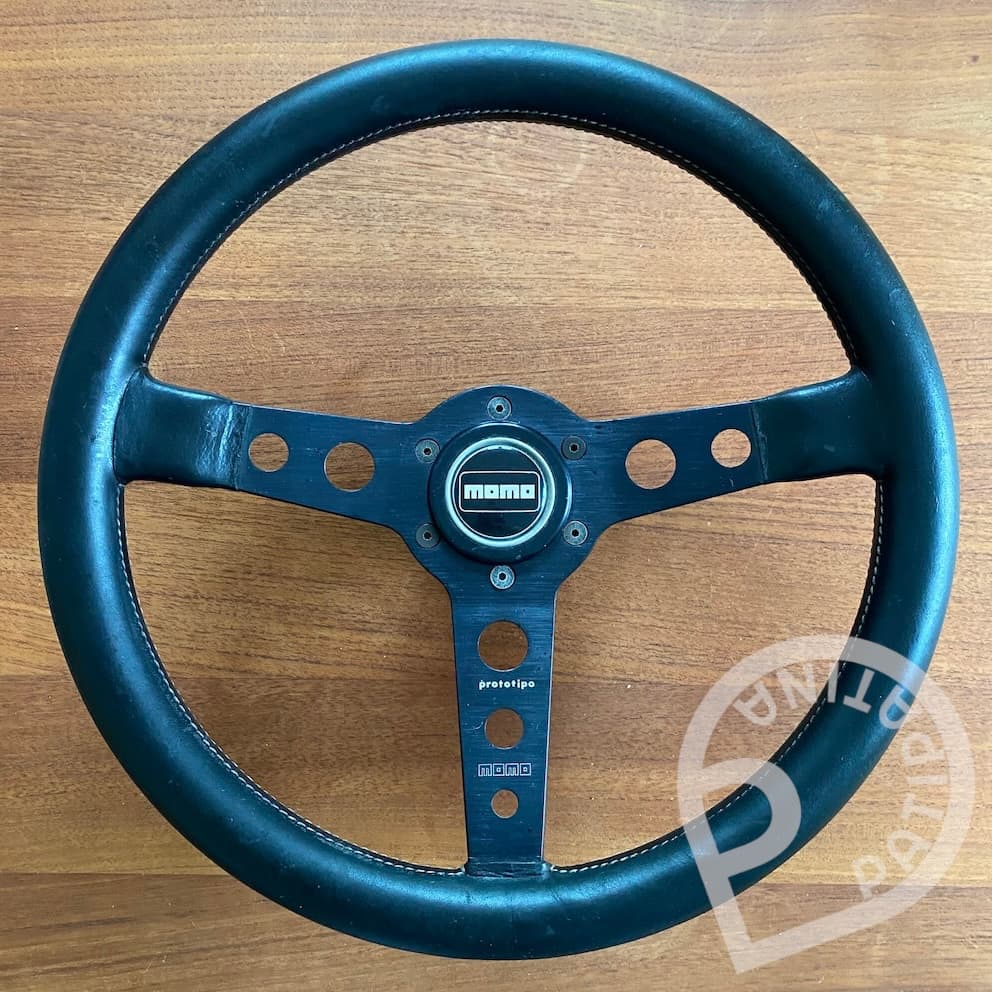
Start gently.
Remove dust first. Always.
Then apply a small amount of leather cleaner onto a cloth — never directly onto the wheel.
Work slowly across the surface. Circular movements. Light pressure.
You’re not scrubbing.
You’re lifting.
Old dirt, oils, residues — they come off in layers, not all at once.
And the first surprise is always the same:
underneath the dirt, there is still a steering wheel trying to survive.
Step 2 – Conditioning the leather
This is the part most people skip.
And the part that matters most.
Leather conditioner is not cosmetic.
It’s structural support.
Apply it with patience. Let it sink in. Work it into the material.
You’ll feel it change slightly under your fingers — not instantly, but gradually.
Softness returns.
Not like new.
But like remembered.
Step 3 – Protection
Now you lock in the condition.
A light protective layer helps reduce UV damage, moisture absorption, and daily wear.
Think of it less as a shield and more as a pause button.
It doesn’t stop time.
It slows down how fast time wins.
What most people get wrong
They overclean.
Or they overfeed.
Or they treat leather like plastic — something that can be reset without consequence.
But leather doesn’t reset.
It accumulates.
And every aggressive intervention removes a bit of what made it interesting in the first place.
When restoration becomes necessary
There is a point where cleaning stops being enough.
Not because the wheel looks bad.
But because the structure no longer responds.
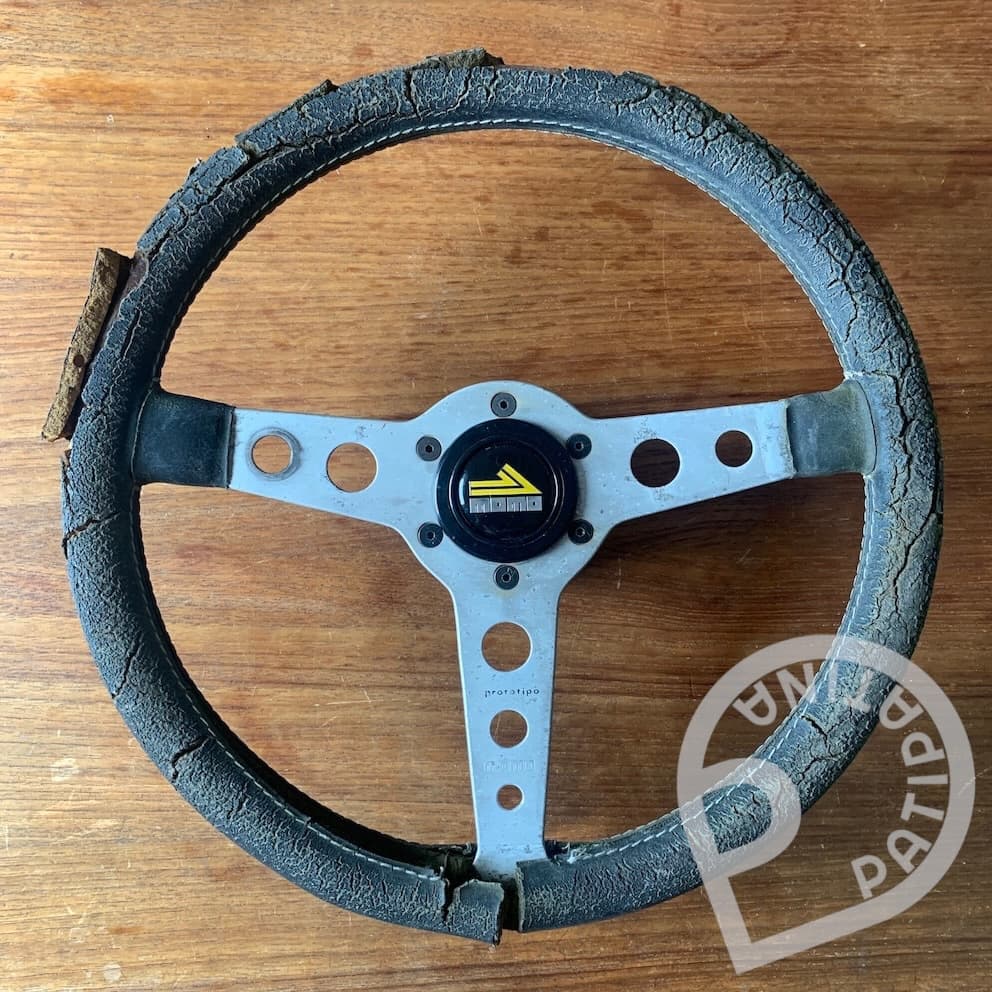
Dry cracks. Missing pigment. Hard edges.
That’s not maintenance anymore.
That’s repair territory.
And it should be treated carefully — or not at all.
Final Thought
A leather steering wheel is not supposed to look new forever.
It’s supposed to stay alive.
Soft enough to feel. Strong enough to hold. Honest enough to show its age.
So before you clean it too aggressively, or restore it too far, or “fix” it too completely — pause for a moment.
Because sometimes the goal is not perfection.
It’s continuity.
And once that’s gone, no conditioner in the world brings it back.