How to Clean an Alcantara Steering Wheel (Suede Care Guide)
A practical guide to bringing Alcantara back to life — without erasing the story it carries.
by Mads – Last updated April 2026
Not everything that looks dirty is actually dirty.
And not everything that looks clean is safe to touch.
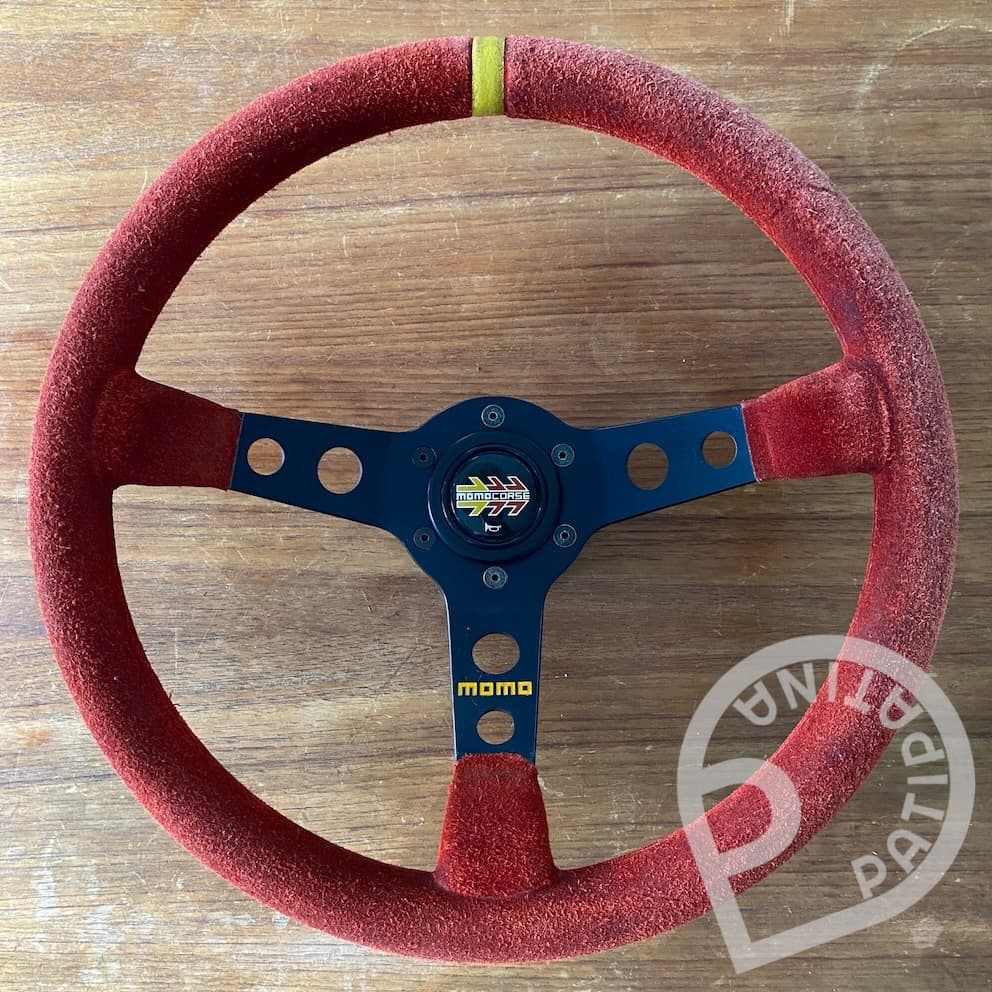
Suede — or Alcantara, if you prefer the modern name — sits somewhere in between. It looks soft. It feels expensive. And it behaves like it remembers everything you’ve ever done to it.
Every drive leaves a trace.
Invisible at first.
Then slowly, unmistakably present.
Oil. Sweat. Dust. Sunscreen. Coffee you swear never spilled.
It all ends up here.
On the one surface you touch more than anything else in the car.
Some links may be affiliate links. I may earn a small commission at no extra cost to you.
The problem with “dirty”
A dirty Alcantara steering wheel doesn’t start dirty.
It becomes that way through repetition.
Hand after hand movement. Corner after corner. Summer heat. Cold mornings.
And at some point, the material stops feeling like fabric and starts feeling like memory.
That’s usually when people panic.
And reach for the wrong solution.
What you actually need
Not much.
But the order matters more than the tools.
- A dedicated fabric / Alcantara cleaner
- A soft brush (really soft – not “medium soft”)
- Microfiber cloths
- Warm water (not hot, not cold – just patient)
That’s it.
No magic. No aggressive chemistry. No shortcuts.


Step 1 – Don’t attack it
Never spray directly onto the wheel.
Not because it’s forbidden.
But because Alcantara doesn’t forgive uneven decisions.
Apply the cleaner to the cloth first.
Control before contact.
Step 2 – Wake the surface up
Use the soft brush.
Not to scrub.
To lift.
There is a difference.
You’re not trying to “clean” at this stage.
You’re trying to release what has settled inside the fibers.
Slow movements. Circular. Light pressure.
If it feels like you’re doing too little, you’re probably doing it right.
Step 3 – Remove what came up
Wipe it down with a clean microfiber cloth.
And watch what transfers.
This is the moment most people underestimate.
Because the wheel never tells you how dirty it was
until you start taking it apart in layers.
Step 4 – Water is not the solution
Water is a correction.
Not a method.
Lightly damp cloth. Nothing more.
Too much moisture doesn’t clean Alcantara — it changes it.
And not in a good way.
Wipe. Don’t soak. Don’t insist.
Step 5 – Drying is part of the process
Pat it dry.
Not because it looks nicer.
But because structure matters more than appearance at this stage.
Let it breathe.
No heat. No shortcuts. No impatience disguised as efficiency.
Step 6 – Repeat, but only if necessary
If it still feels wrong, repeat.
But only if you’re sure what “wrong” means.
Sometimes what you’re seeing is not dirt anymore.
It’s wear.
And wear is not a cleaning problem.
Final Thought
Some parts can be replaced.
Some can be restored.
And some should only be handled by people who don’t feel the need to explain every step.
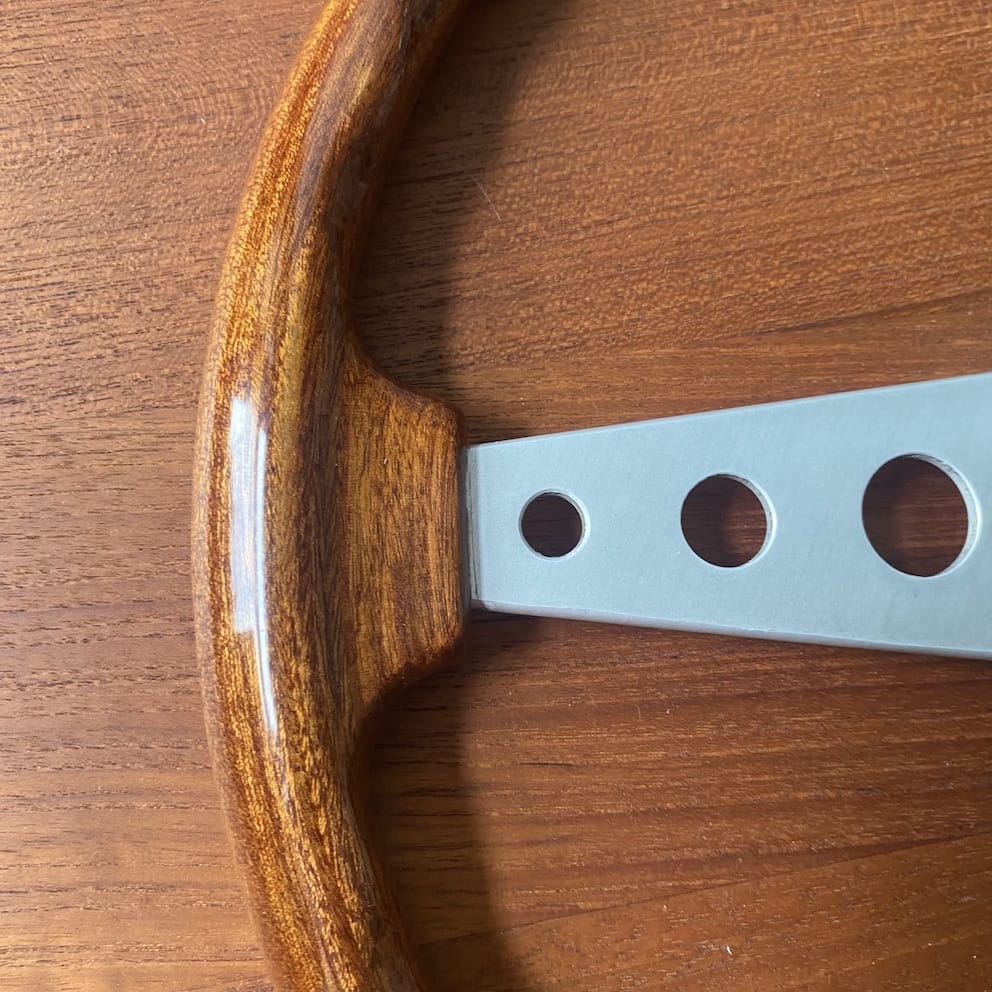
If you have a wooden steering wheel — let someone like Peter do it.
Not because it’s complicated.
But because it isn’t supposed to be simplified.