Momo Le Mans – Complete History, Generations & Guide
The simpler Momo — defined by vinyl, not compromise.
by Mads – Last updated April 2026
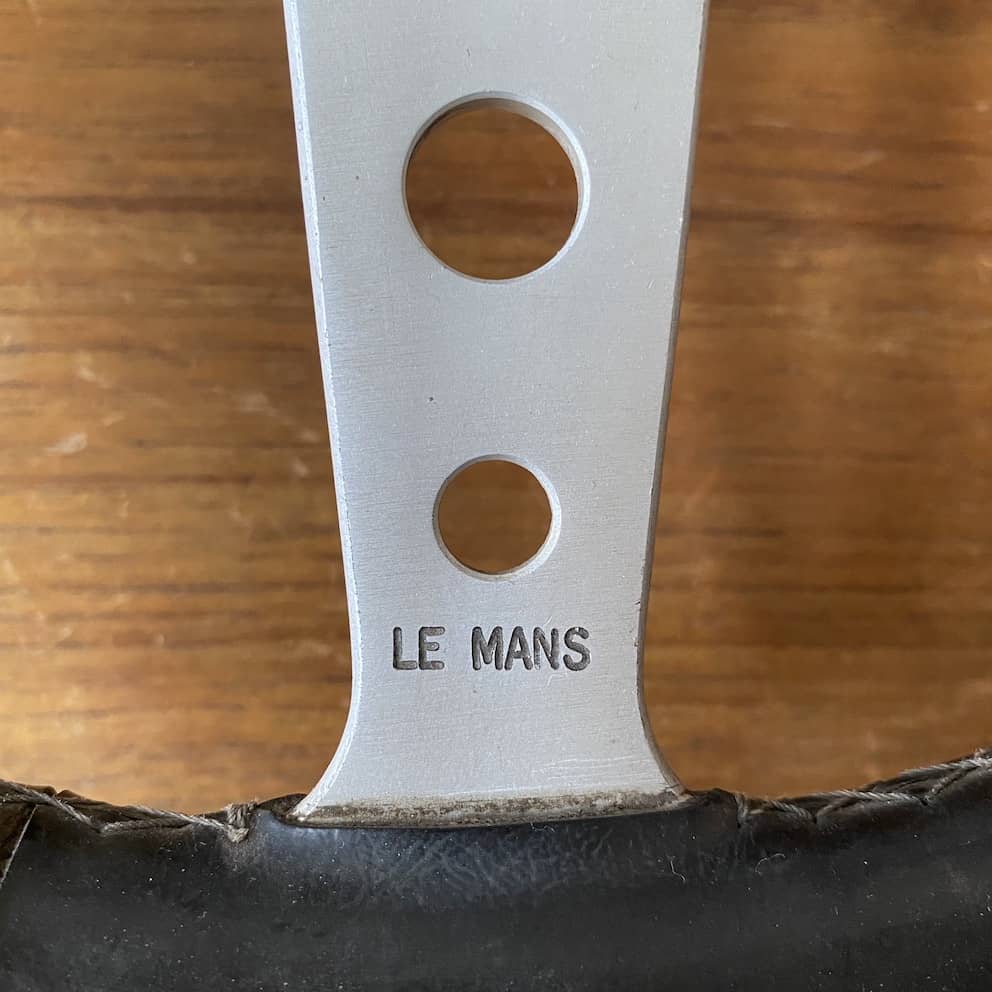
There are iconic Momo steering wheels.
And then there are the early ones that quietly built the brand.
The Momo Le Mans sits right at that beginning.
Not as famous as the Prototipo.
Not as refined as later models.
But deeply rooted in Momo’s earliest design philosophy.
This guide brings structure to a wheel that was never really documented — generations, materials, sizes, and the details that define it.
Some links may be affiliate links. I may earn a small commission at no extra cost to you.
Material identity: vinyl vs. leather
The defining difference: Vinyl.
While most Momo wheels used leather, the Le Mans took a different route.
Not as a downgrade — but as a design choice.
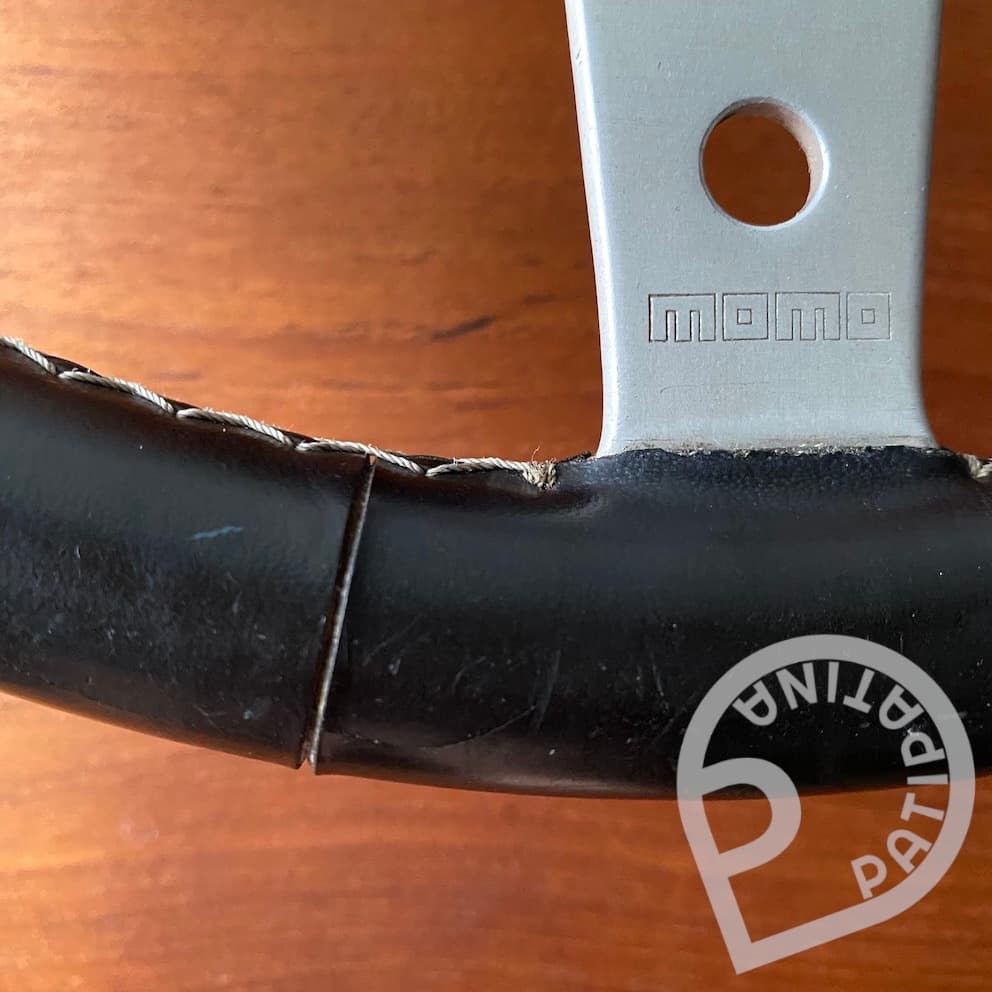
Over time, this leads to a very specific characteristic:
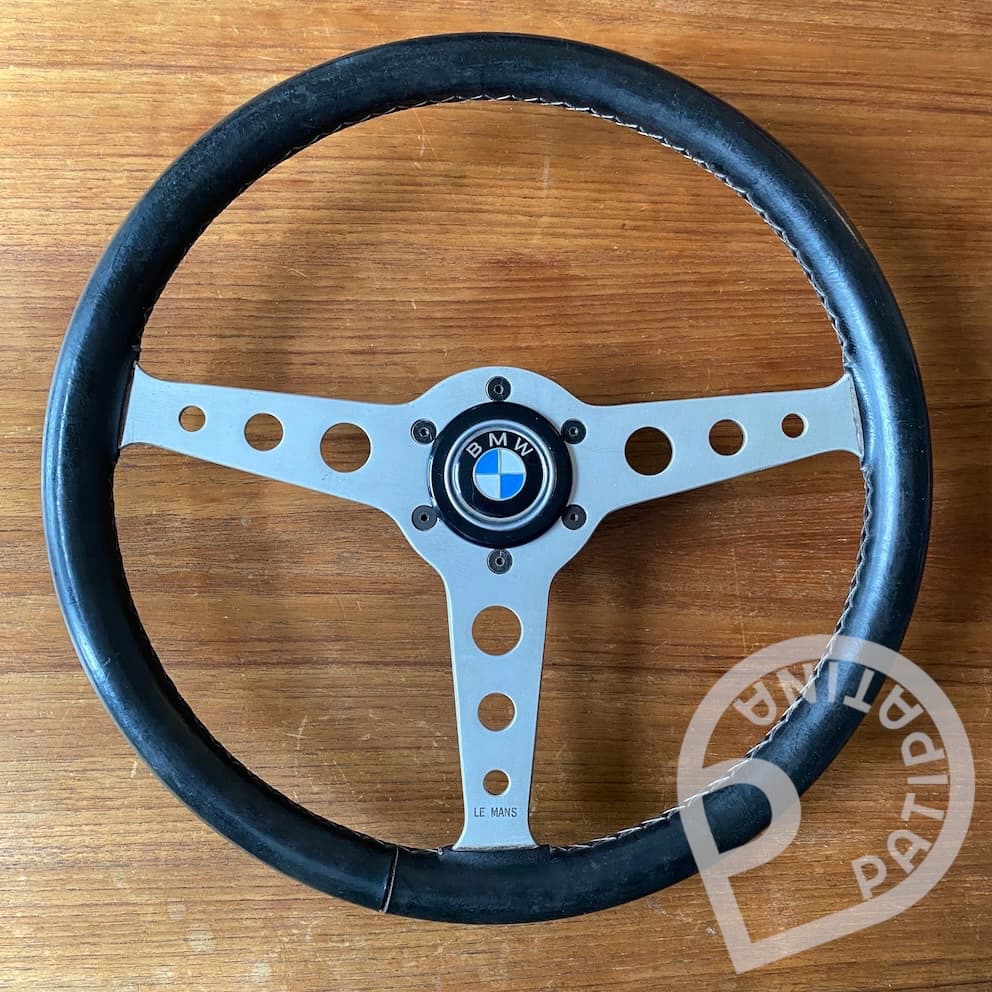
- slight shrinkage of the material
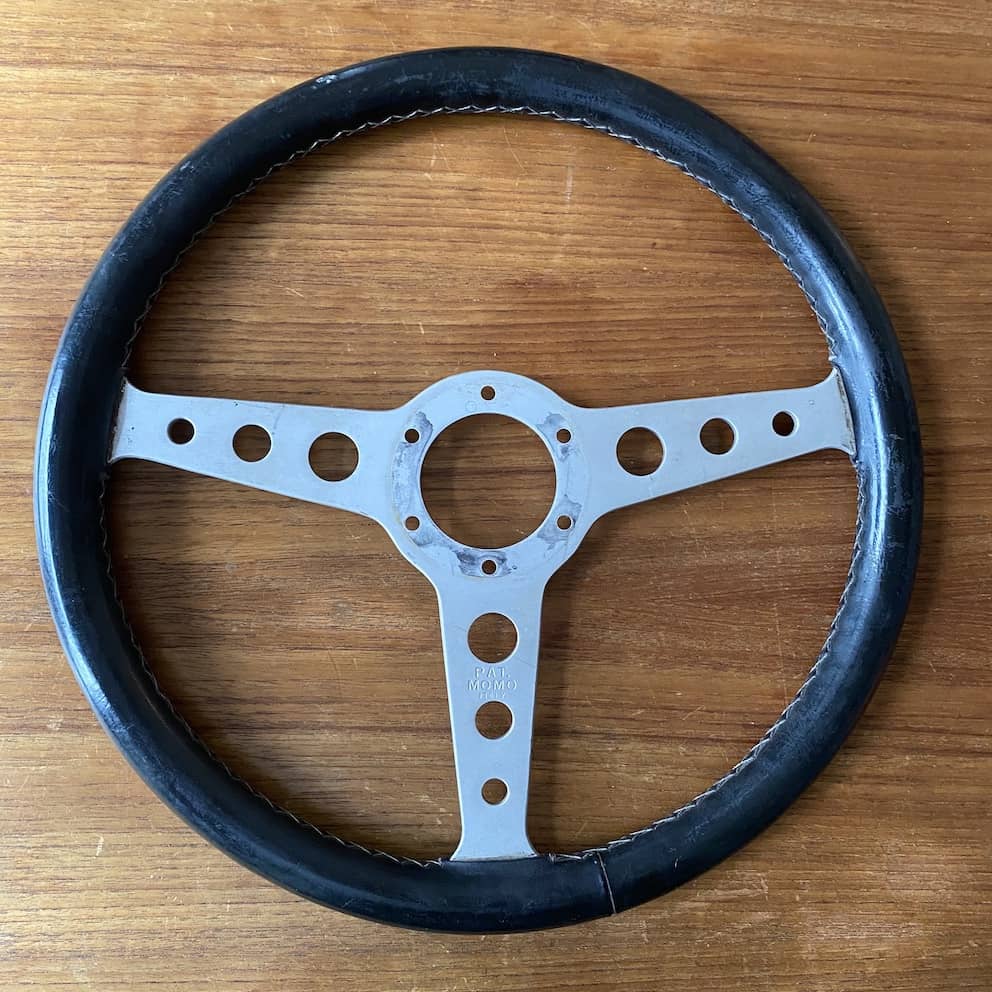
- a visible gap, typically around the 7 o’clock position
This “imperfection” is one of the strongest authenticity indicators today.
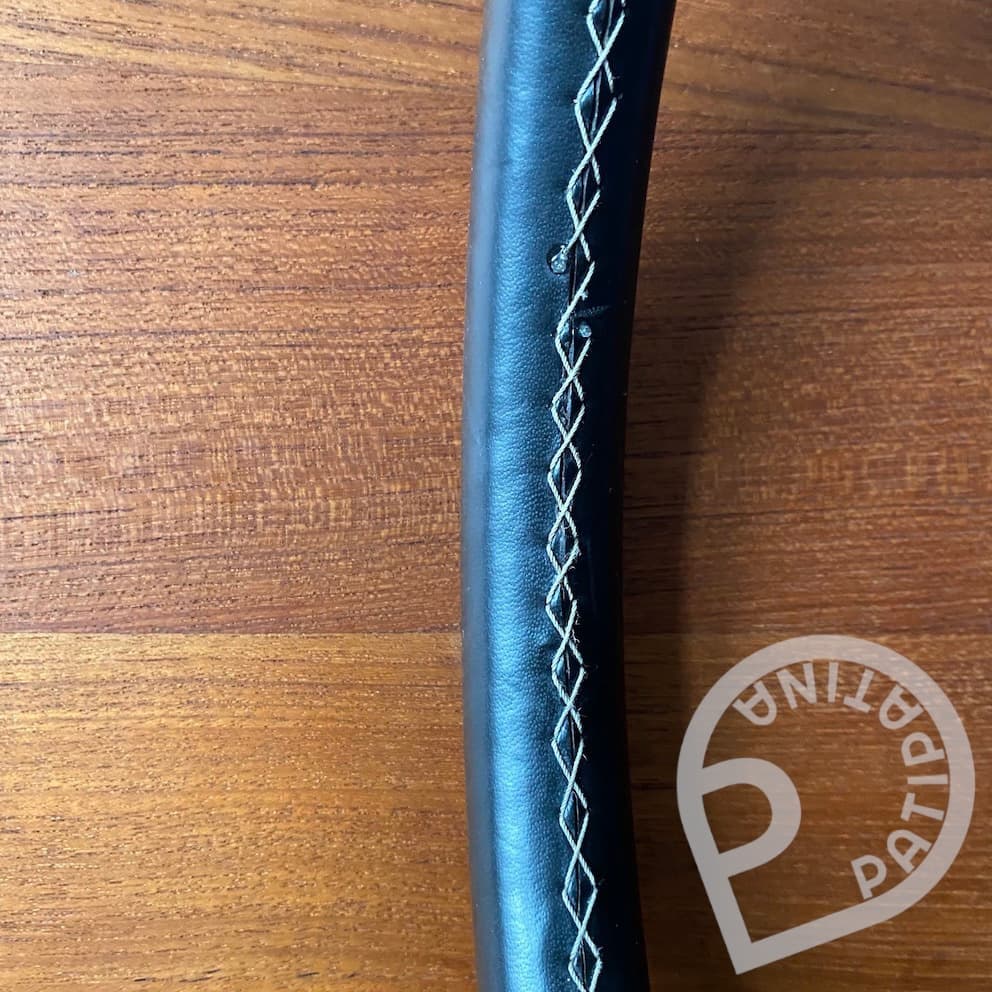
Material detail: cross stitching
The second defining detail: Cross stitching.
Not hidden. Not subtle.
Very much intentional.
Instead of a clean, seamless finish, the Le Mans exposes its construction — a visible X-pattern running along the inner grip.
It’s raw compared to later Momo wheels.
Less refined. More mechanical.
And that’s exactly the point.
Over time, the stitching develops its own character:
- slight fraying
- uneven tension
- darkened threads from use
Together with the vinyl, it creates a look you don’t get anywhere else.
Not perfect.
But unmistakable.
And just like the shrink gap, it’s not a flaw.
It’s part of the identity.
First generation (mid 1960s – early 1970s)
The earliest Le Mans wheels are easy to recognize once you know what to look for.
Key identifiers:
- Vinyl cover instead of leather
- Distinctive cross stitching
- Flat profile
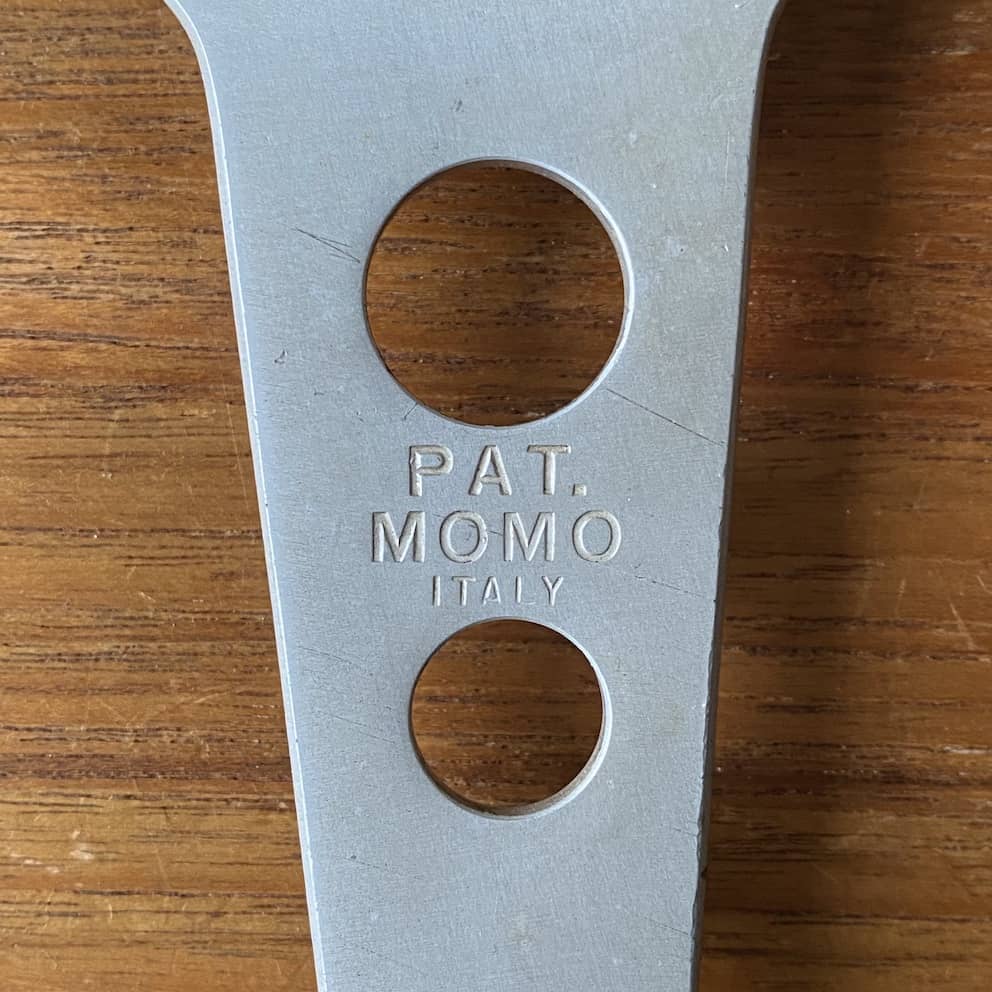
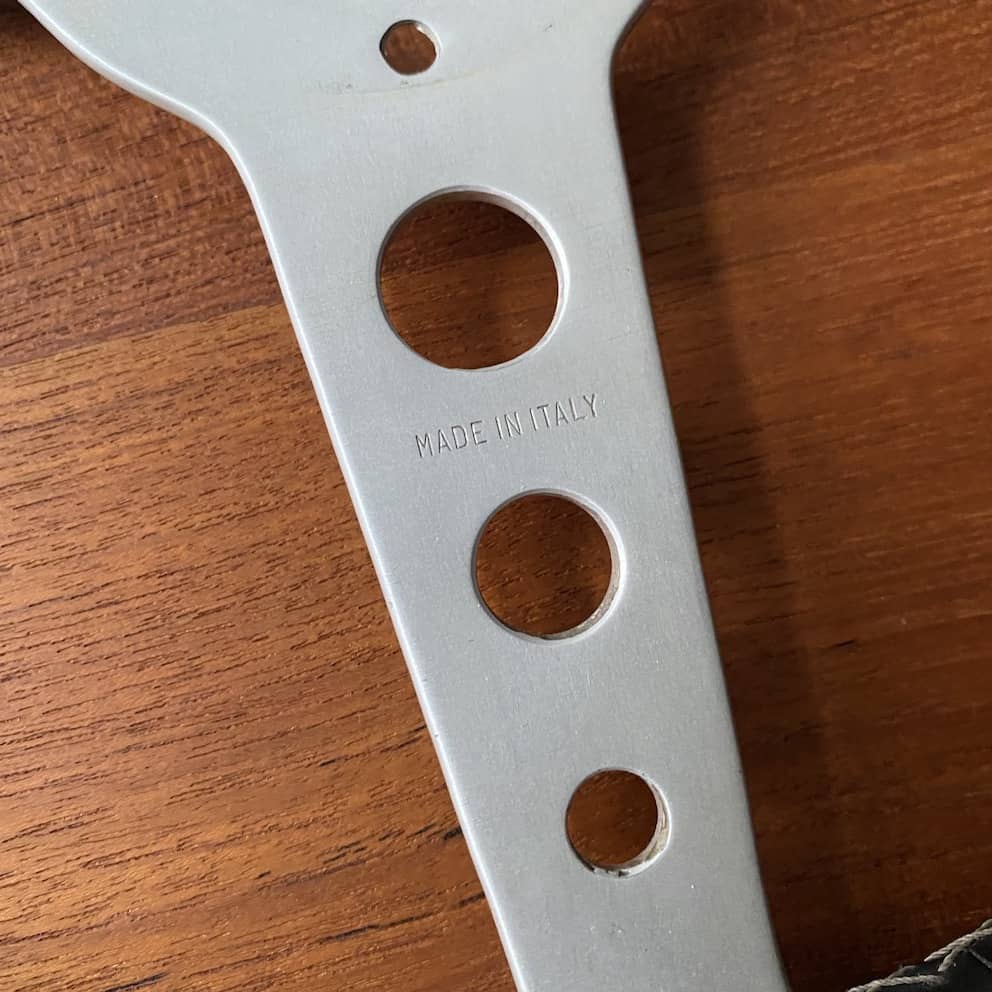
- Early Momo stampings on the back
Common markings include:
- “No. 12707 MOMO Made in Italy”
- “MOMO”
- “PAT. MOMO ITALY”
As with many early Momo wheels, production was not standardized.
Stampings, finishes, and small details can vary — even within the same period.
That inconsistency is part of the story.
First-generation Le Mans wheels were offered in multiple sizes:
- 315 mm
- 355 mm (most common)
- 380 mm
Across all variants: Flat only.
Even as semi-dish wheels became more common, the Le Mans never followed that shift.
Second generation (early – mid 1970s)
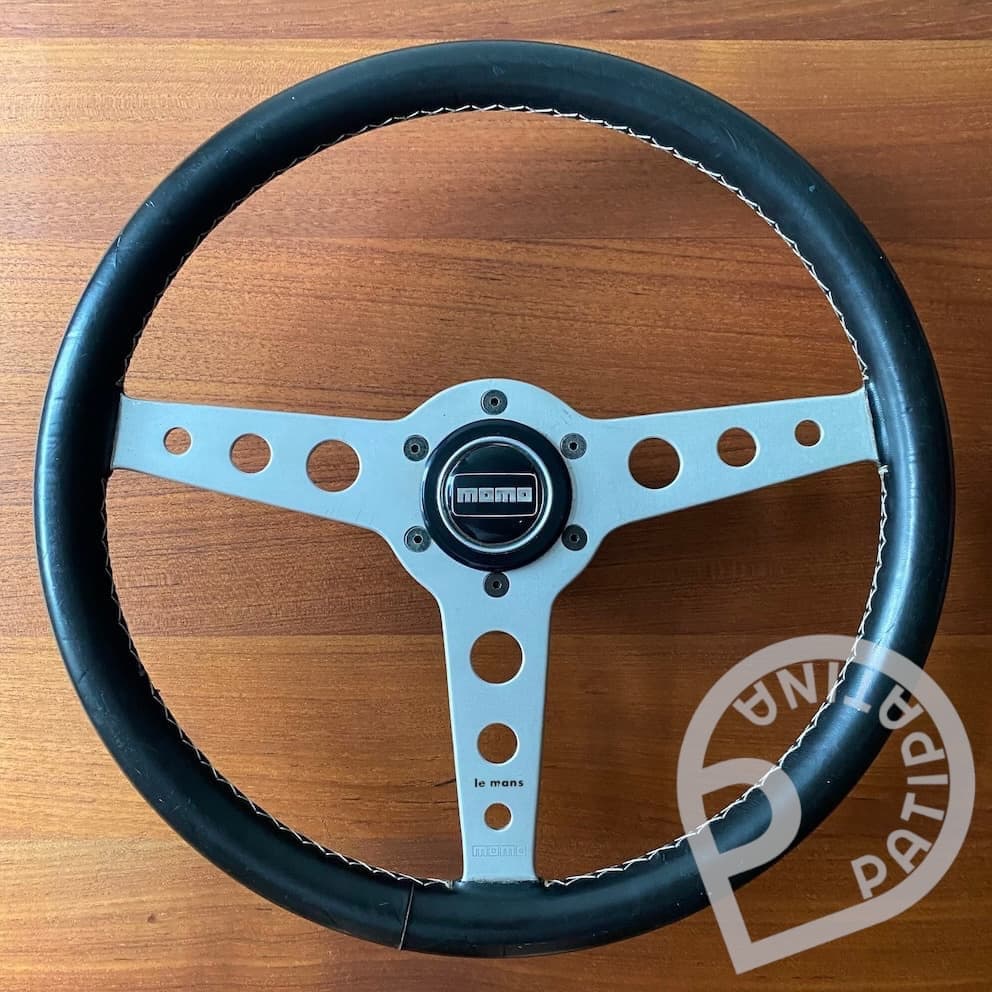
A later version of the Le Mans appeared with a subtle but important change: Silk-screen “Le Mans” logo on the front. Production numbers seem lower compared to the earlier version, and these wheels appear less frequently today. Sizes shifted slightly:
- 320 mm
- 350 mm
The core concept remained unchanged:
- vinyl cover
- cross stitching
- flat design
Some links may be affiliate links. I may earn a small commission at no extra cost to you.
Production timeline
- Start: approx. 1964–1966
- End: mid 1970s
- Two loosely defined generations
- No fully documented transitions
Like many early Momo products, exact timelines remain unclear.
Why older Le Mans wheels are interesting
Not because they are rare in the traditional sense.
But because they are different.
They don’t age like leather wheels.
They don’t feel like later Momo designs.
They don’t try to be anything else.
And that makes them stand out — quietly.
Final Thought
The Momo Le Mans is not a headline wheel.
It doesn’t dominate collections.
It doesn’t define an era.
But it shows where things started.
A simpler material.
A clear function.
No unnecessary complexity.
Understanding the Le Mans is not about specs.
It’s about recognizing intention.