Momo Prototipo – Complete History, Generations & Guide
The steering wheel that never stopped evolving — and never stopped being relevant.
by Mads – Last updated April 2026
There are steering wheels.
And then there is the Momo Prototipo.
For many, it’s not just a part of a classic car — it’s the center of it. A piece of motorsport history that moved from race paddocks into road cars, and somehow never lost its identity along the way.
This guide brings structure into something that was never fully structured: generations, markings, sizes, and the subtle changes that define what a Prototipo actually is.
Some links may be affiliate links. I may earn a small commission at no extra cost to you.
Why the Prototipo matters
The Momo Prototipo is one of those rare designs that didn’t need reinvention.
It appeared in iconic race cars, became a standard in performance road cars, and is still produced today — largely unchanged in spirit.
That continuity is exactly what makes it difficult to read.
Because depending on the wheel, “Prototipo” can mean very different things.
First generation (mid 1960s – early 1970s)
The earliest Prototipo wheels are defined by something very simple:
They are not yet standardized.
Key Identifier:
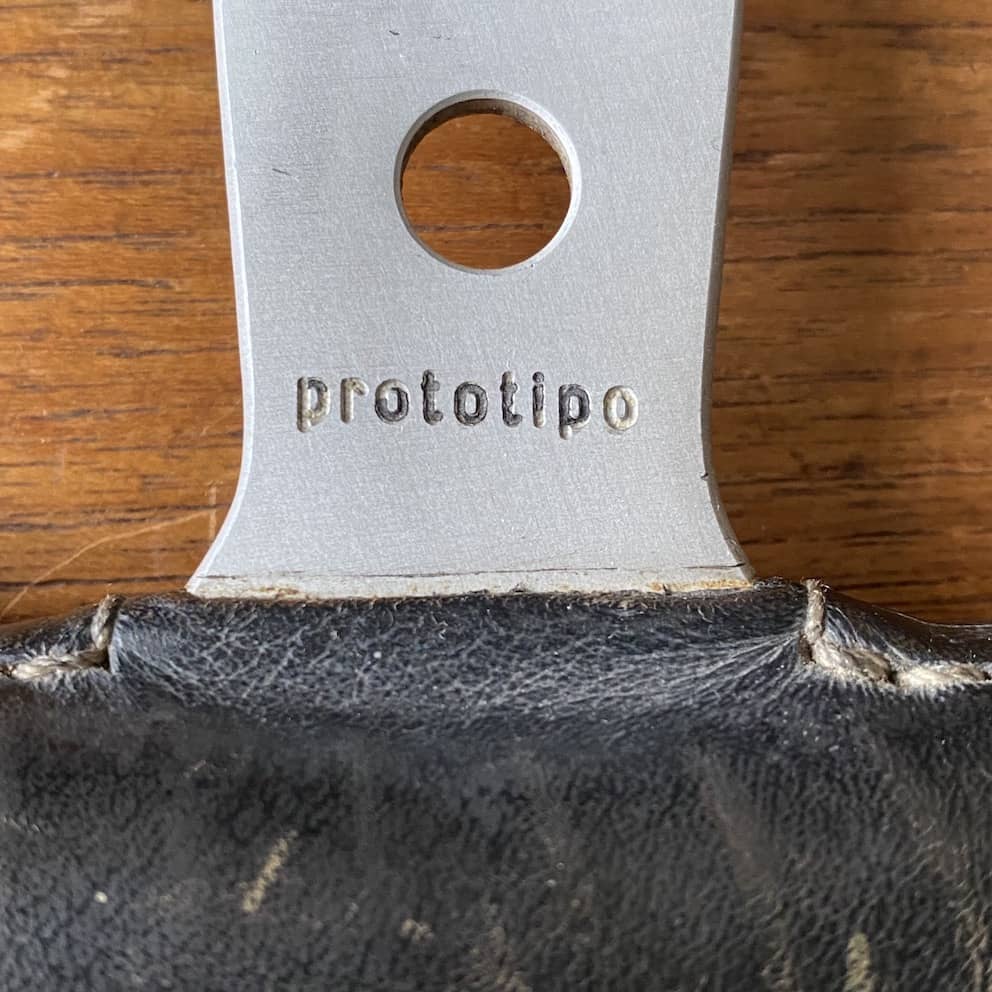
- Engraved “Prototipo” logo on center spoke
- No printed branding yet
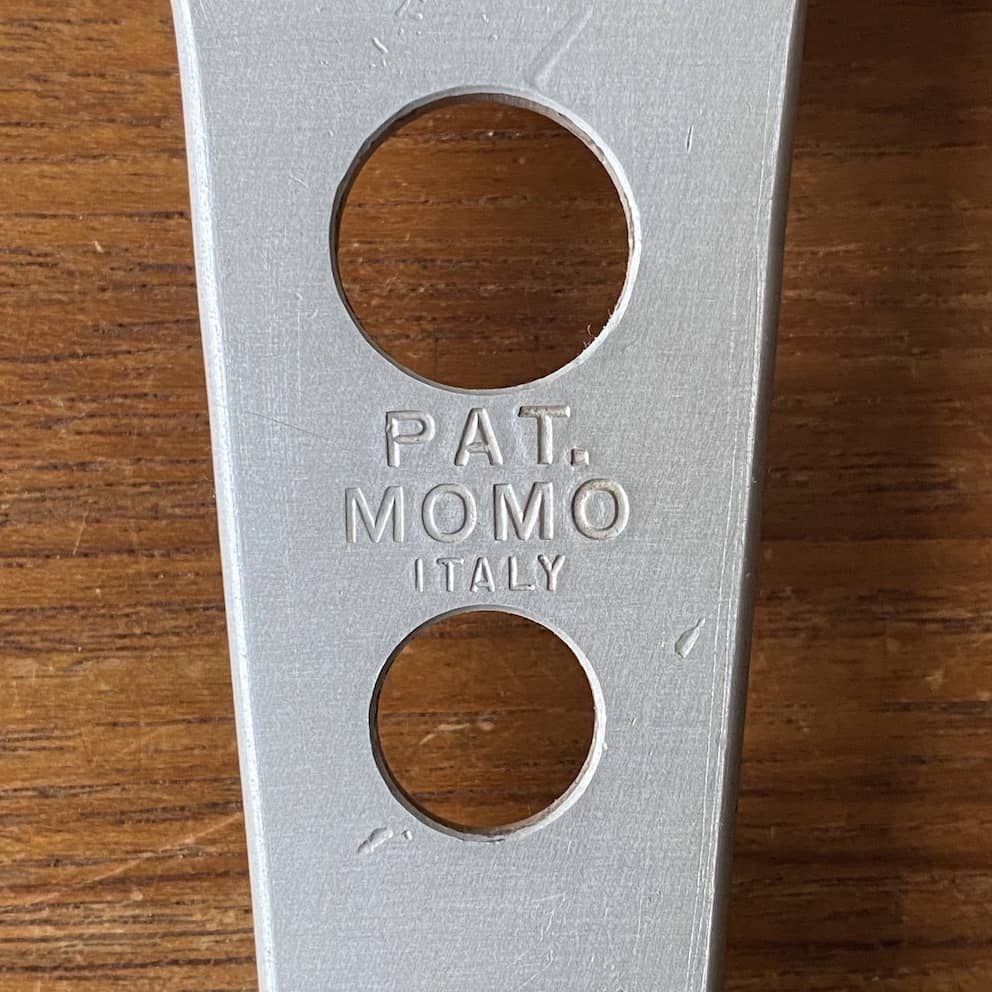
- Backside stamps vary widely
Common markings from this era:
- “12707 MOMO Made in Italy”
- “MOMO”
- “PAT. MOMO ITALY”
These variations belong to the same general production window, but exact transitions remain undocumented.
That inconsistency is part of their identity.
Sizes & Variants
Early Prototipos were offered in multiple sizes:
- 320 mm
- 360 mm
- 370 mm
- 380 mm
Some period references mention 350 mm, but this remains unconfirmed.
Both flat and dished versions existed, with dish variants becoming more common in later production.
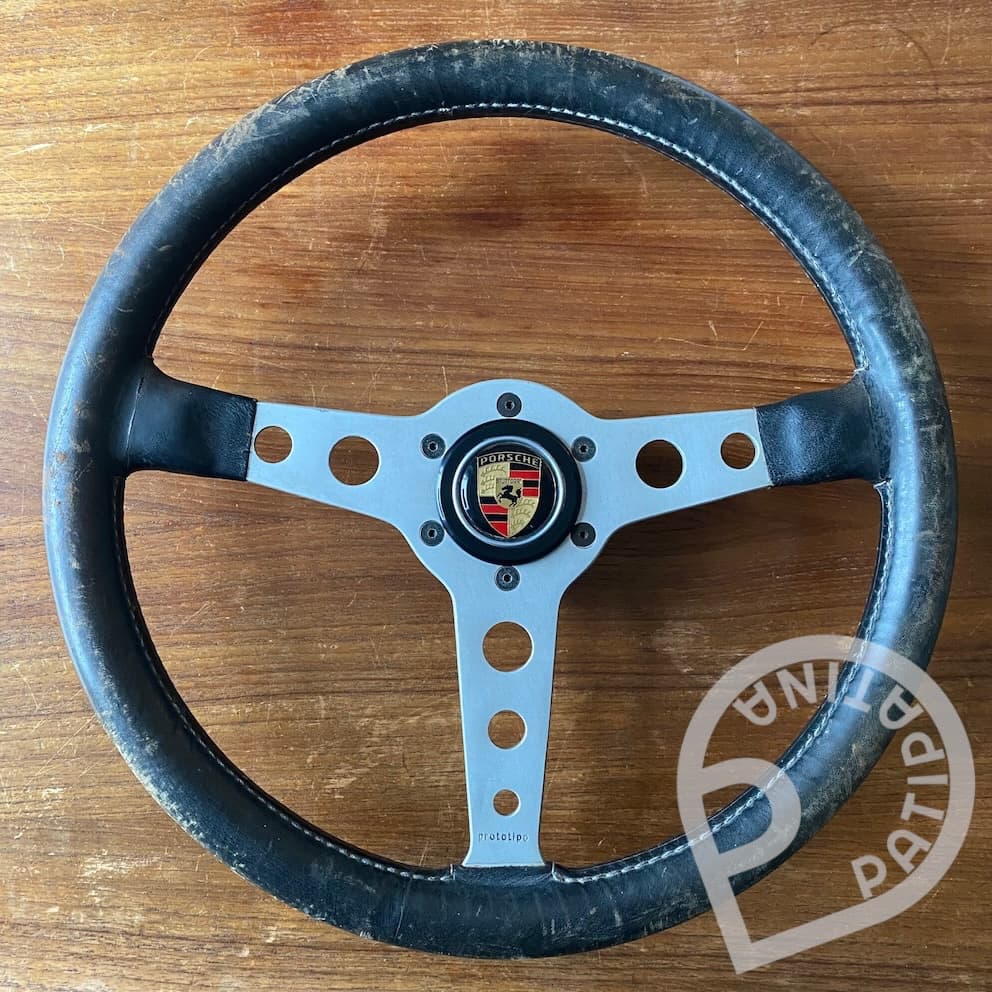
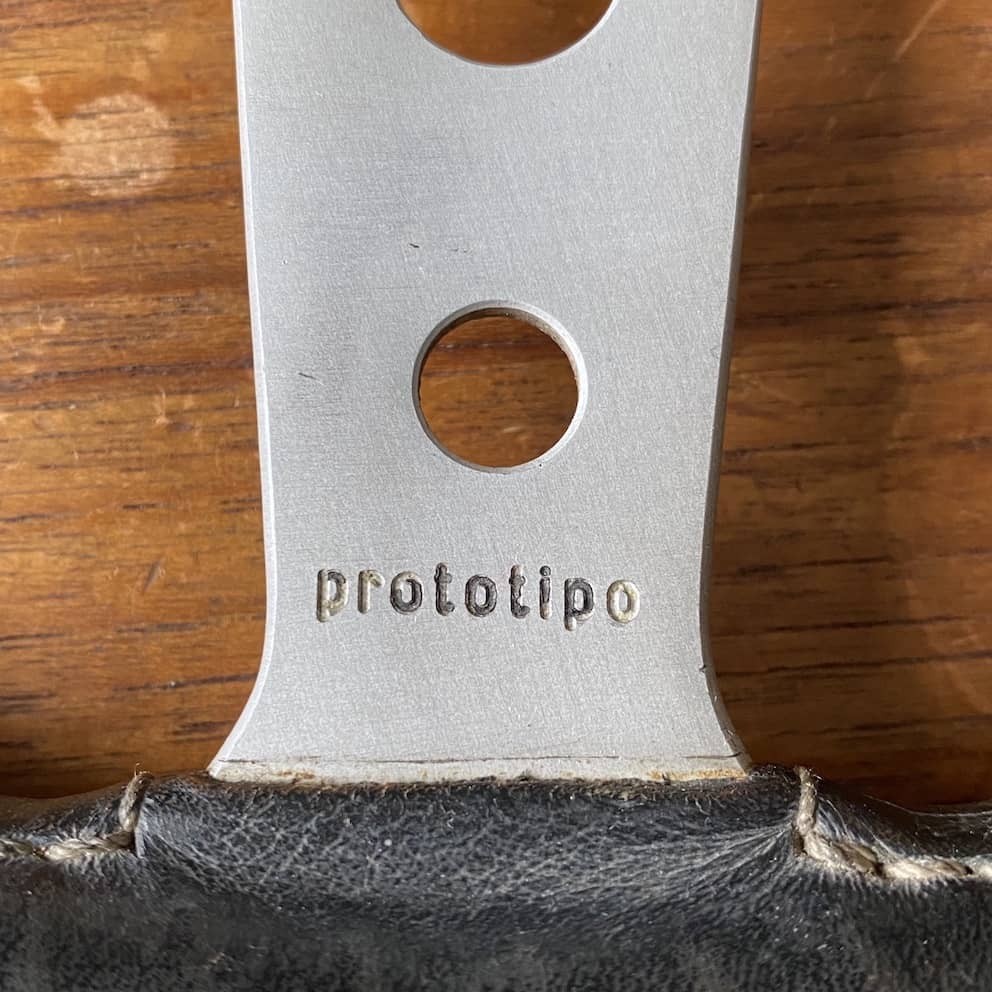
Second generation (1972 – around 1980)
This is where the Prototipo becomes visually familiar.
Key change:
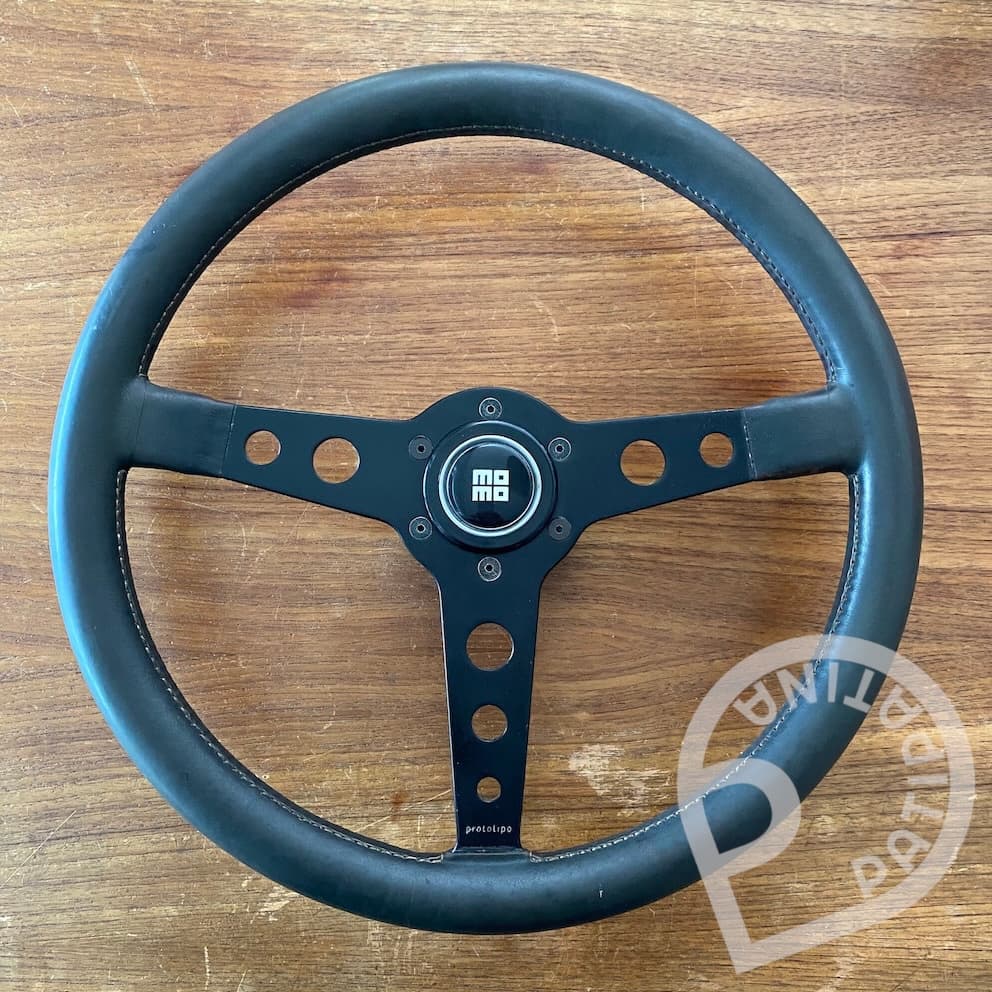
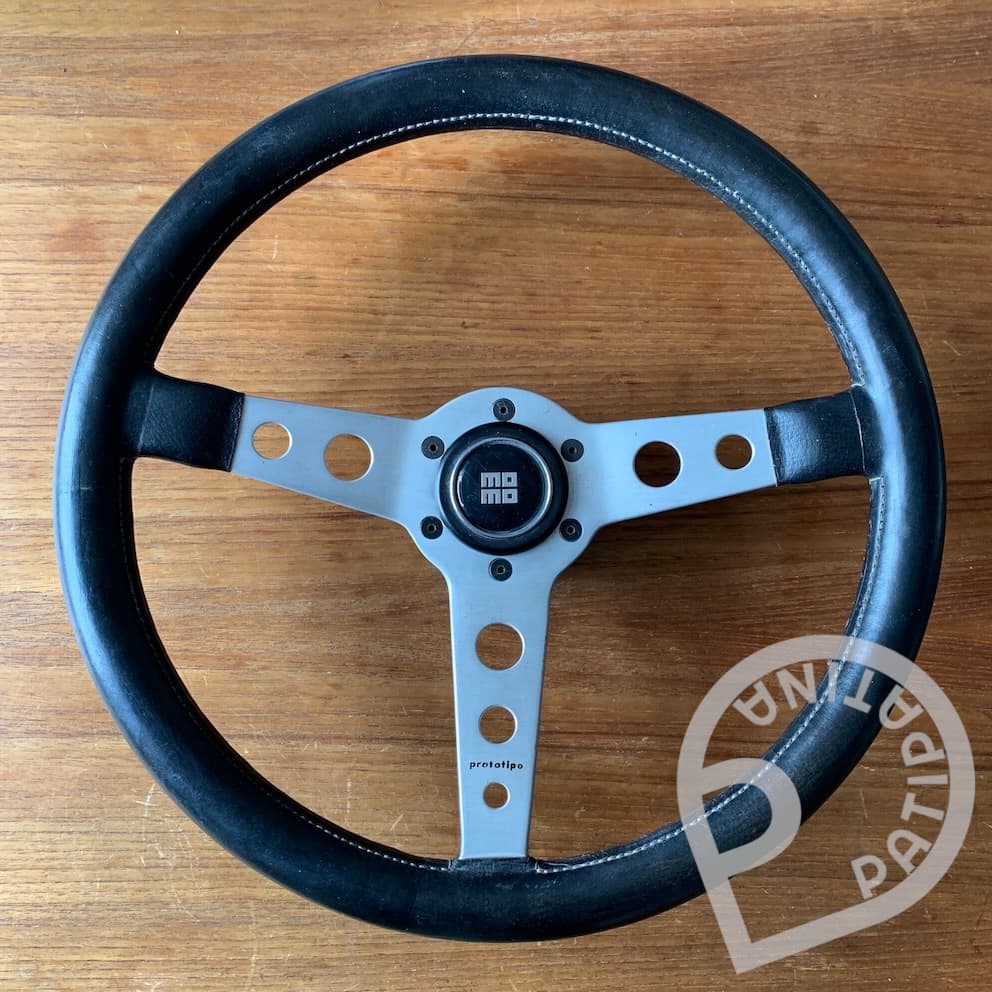
The logo moves from engraving to printed silkscreen on the center spoke.
- Silver wheels → black print
- Black wheels → white print
More standardized, but still not fully uniform.
Backside markings
During this period, the back of the wheel becomes the key identifier:
- 1968–1973 → stacked MOMO logo
- 1974–1976 → “MADE IN ITALY” or “M20340”
Even identical wheels can differ significantly in weight and construction depending on stamping era.
Transition to date stamping
A major shift happens:
Momo introduces production dating:
m-yy format
Example:
- 6-79
- 2-80
This is the first time Prototipos can be dated precisely.
Everything before this remains approximate.


Some links may be affiliate links. I may earn a small commission at no extra cost to you.
Third generation
The third generation refines rather than reinvents.
Changes include:
- Updated boxed logo design
- Slightly sharper spoke edges
- Minor production variations in stamping and finishing
Functionally and visually, it remains a Prototipo — but with more modern manufacturing consistency.
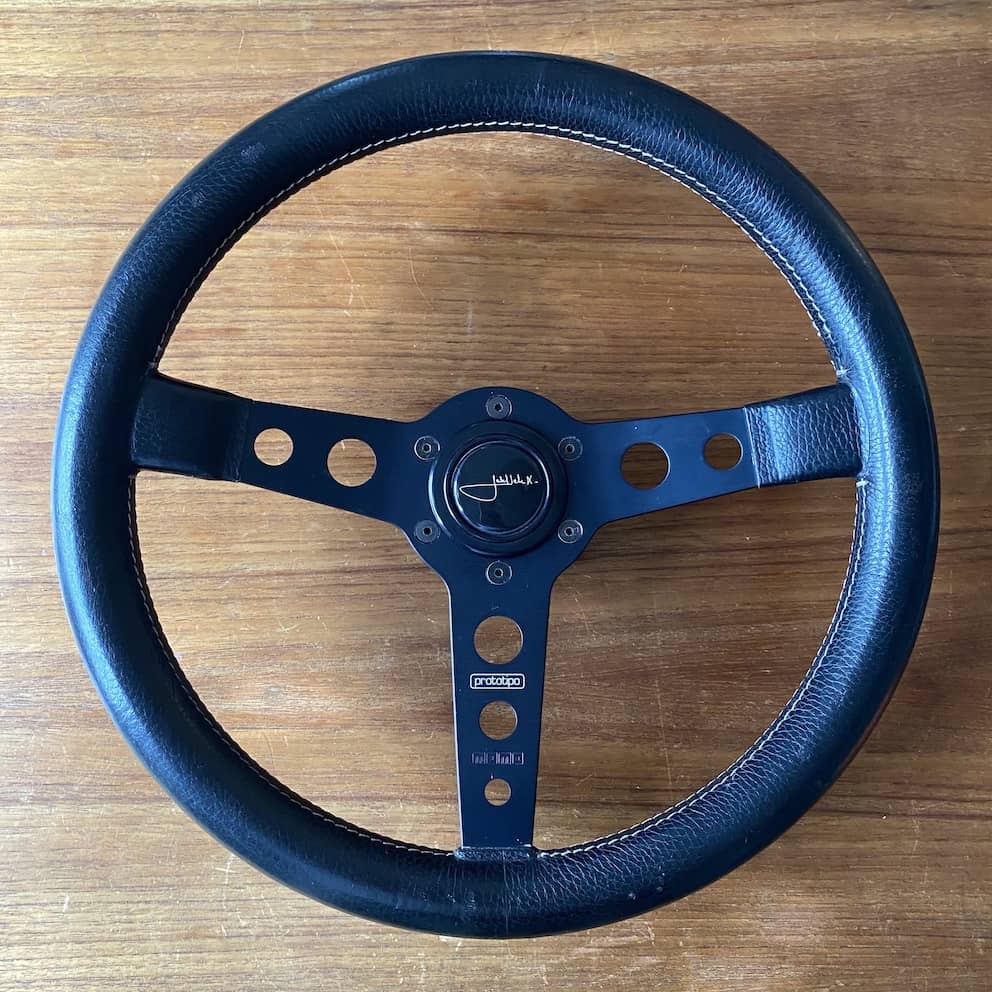

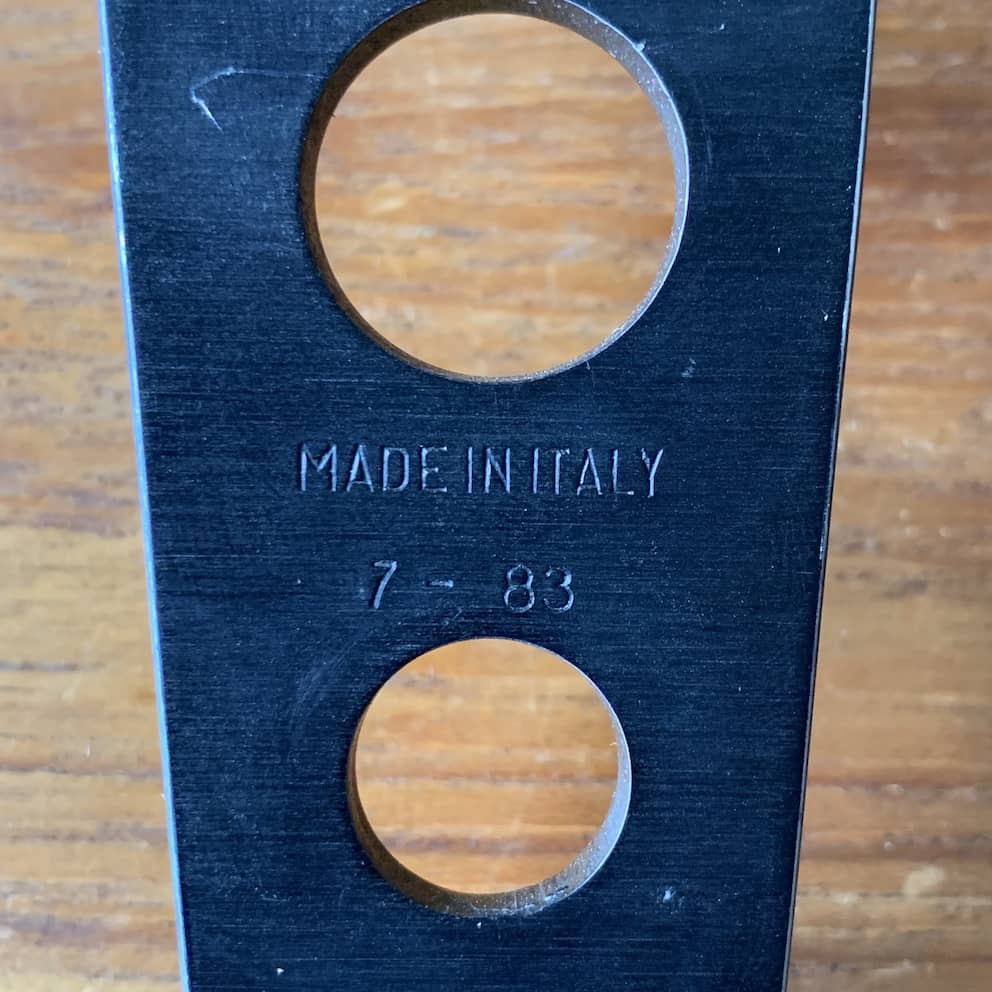
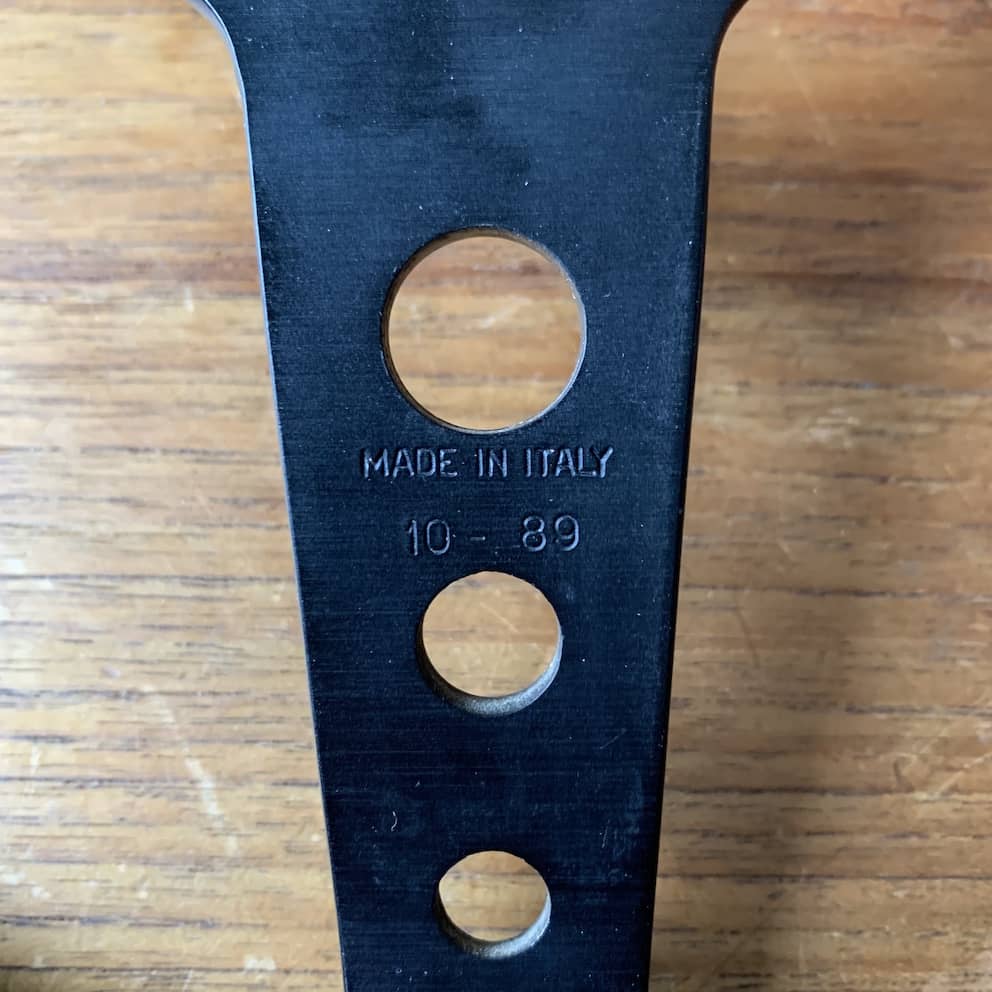
Some links may be affiliate links. I may earn a small commission at no extra cost to you.
Special variants
Beyond standard production, several versions exist:
- Racing-specific Prototipos (Porsche endurance cars)
- Prototipo S variants
- Non-retail motorsport-only configurations
These often differ in padding, spoke structure, or mounting details.
Why older Prototipos are so desirable
It’s not just age.
It’s ambiguity.
Early wheels carry:
- inconsistent markings
- subtle manufacturing differences
- direct links to racing applications
Later wheels are more precise — but less mysterious.
And in collecting, that mystery matters.
Final Thought
The Momo Prototipo is not a static product.
It’s a moving reference point.
Depending on when you look at it, it tells a different story — sometimes technical, sometimes chaotic, always connected to motorsport culture.
Understanding it is less about memorizing details
and more about recognizing patterns.
By the late 1980s, a new generation of the Prototipo appeared. While visually similar at first glance, the character changed noticeably. Production quality, especially in materials like aluminum finishing and leather, began to decline compared to earlier wheels.
Over time, there were additional newer iterations and “heritage” versions, but for me personally, the original appeal was no longer the same. The precision, feel, and material honesty that defined the earlier decades were no longer at the center.
That’s where my focus ends.
Everything after that belongs to a different chapter of the same name.