by Mads – August 19, 2019
People keep asking me to show more of what’s actually sitting in my garage. Not just parts, not just steering wheels, but the cars themselves. The daily drivers, the projects, the ones that stayed and the ones that didn’t. So I figured I might as well start with something that actually means something to me.
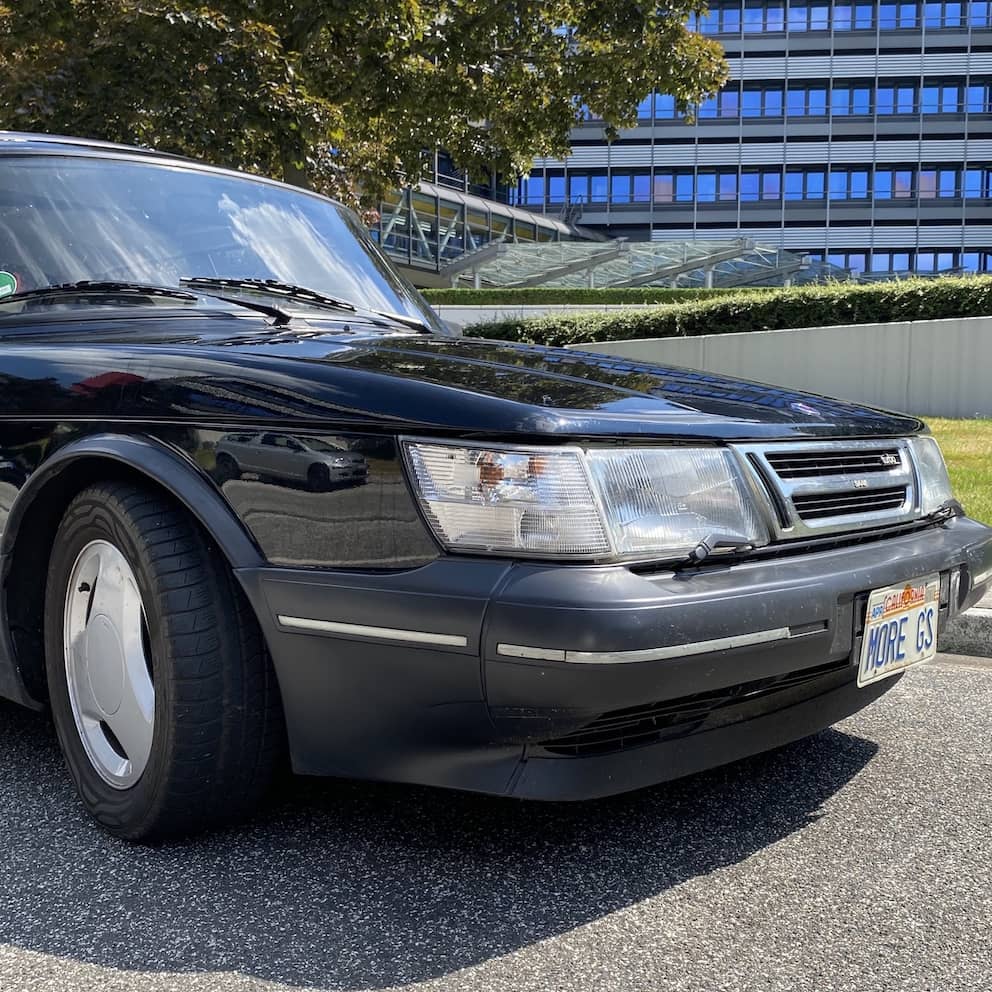
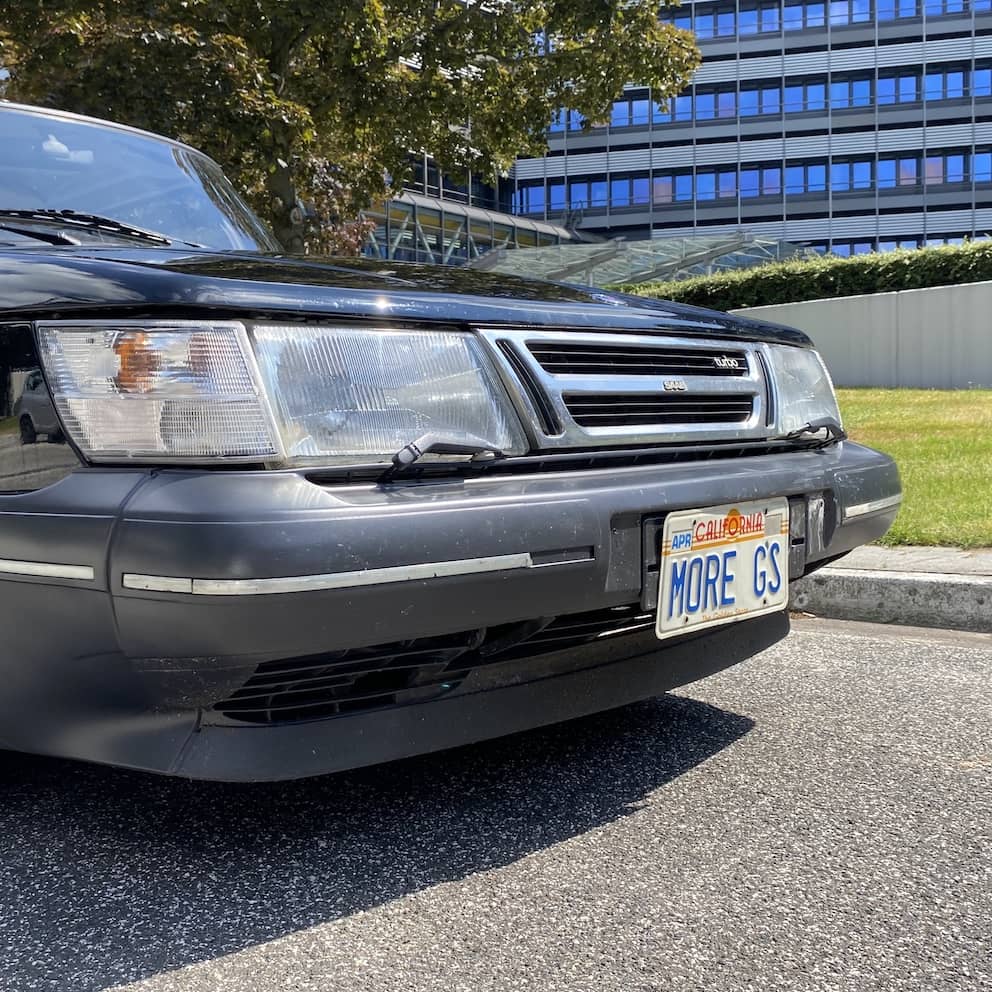
My Saab 900 SPG
It’s not even my first Saab 900 Turbo, it’s the second one I bought, which probably tells you more about the car than any spec sheet ever could. There’s just something about these cars that pulls you back in, even if you’ve already been there before.
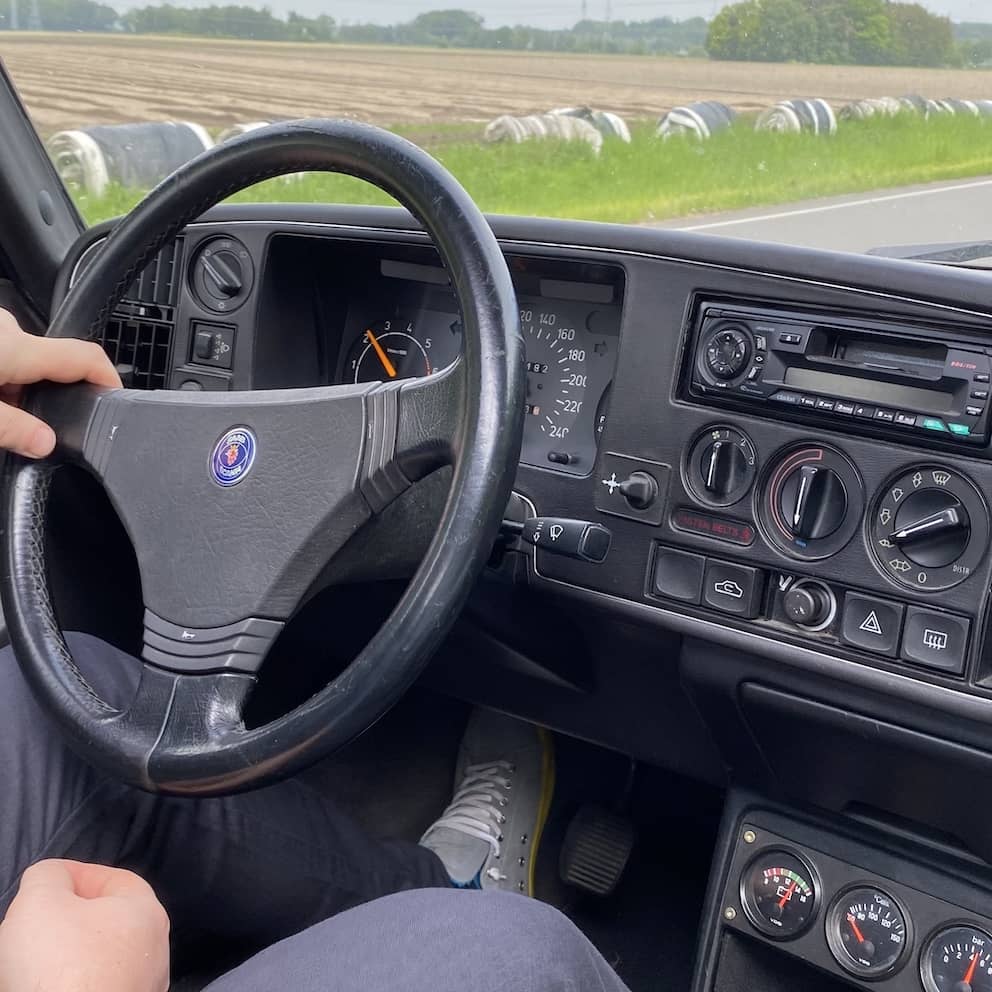
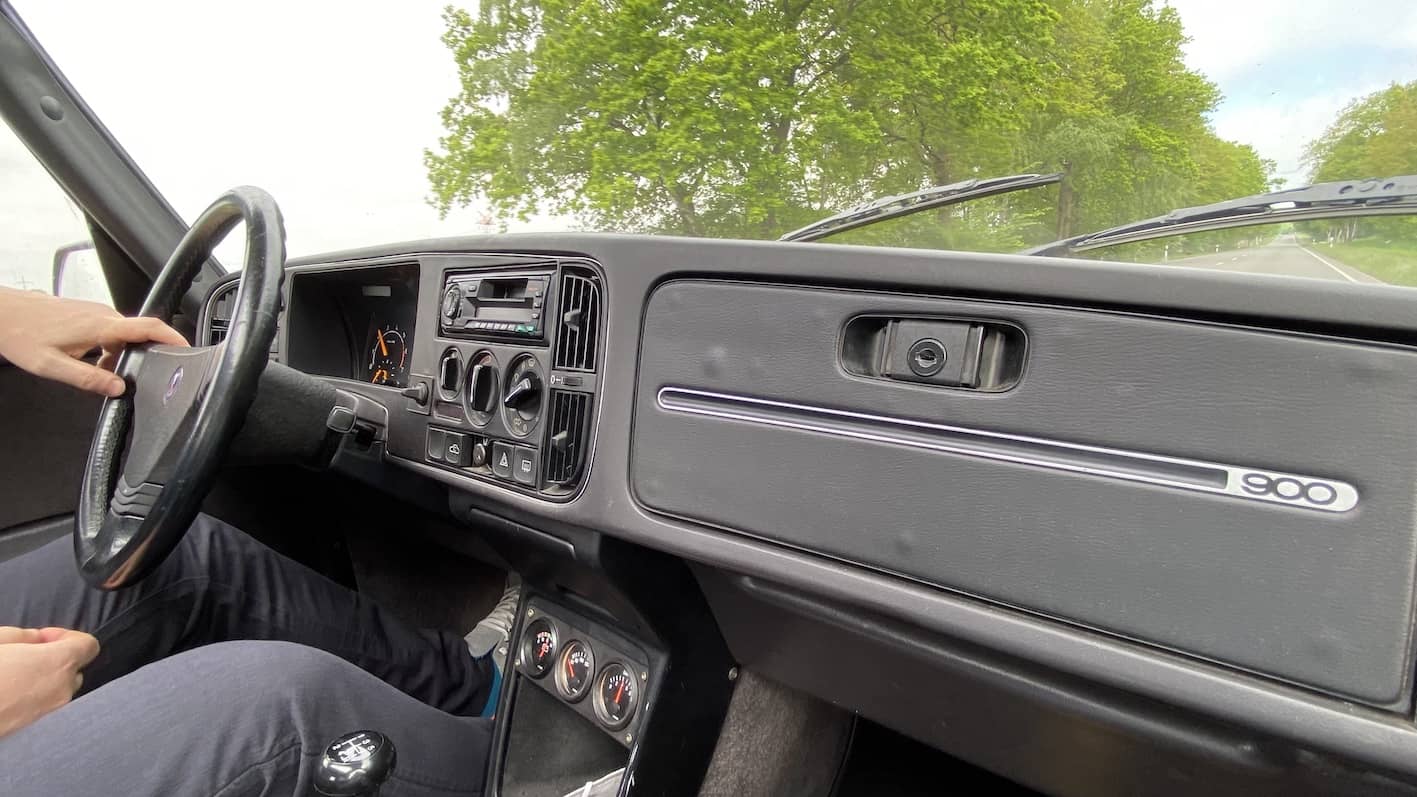
Saab has always been a bit different. Not in a marketing way, but in a very real, slightly stubborn engineering way. You see it everywhere once you start looking for it. The ignition switch down in the center console, the way the windshield wraps around you, the blackout panel at night. All of that is nice, all of that feels special, but let’s be honest, that’s not the reason why people like me keep coming back to these cars.
It’s the turbo.
And not just because it’s there, but because of how Saab approached it. Turbochargers weren’t new when Saab introduced the 99 Turbo in 1978. Trucks had them, marine engines had them, and even some passenger cars in the 60s experimented with the idea. Porsche later turned turbo into something glamorous, something aggressive and slightly intimidating. But Saab took a different route. They didn’t just want more power, they wanted something that actually worked in the real world.
They didn’t have the resources to constantly develop bigger engines, so they focused on making a smaller engine smarter. That’s where things like the wastegate and the APC system came into play, controlling boost and protecting the engine from knock. Combined with electronic fuel injection, this wasn’t just about performance anymore, it was about making turbocharging usable every single day. Cold starts, traffic, long distances – the car just had to work.
And it did.
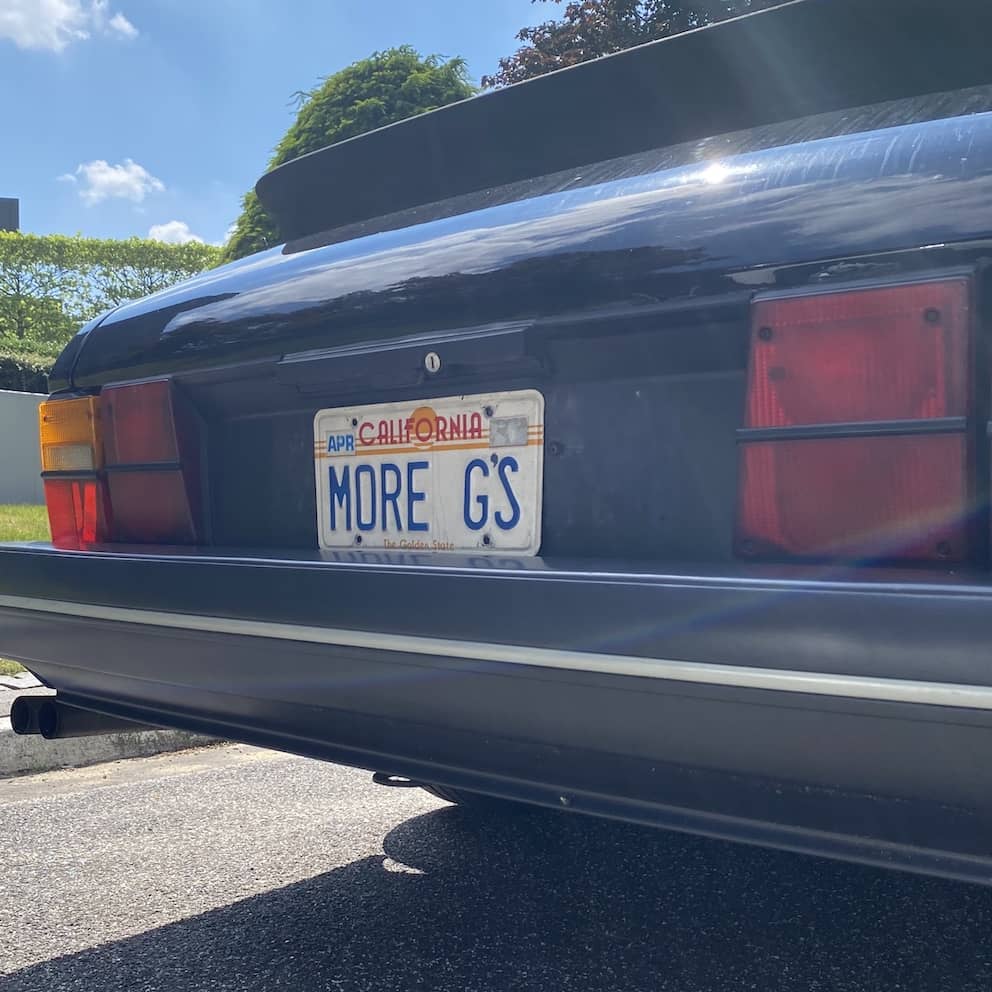
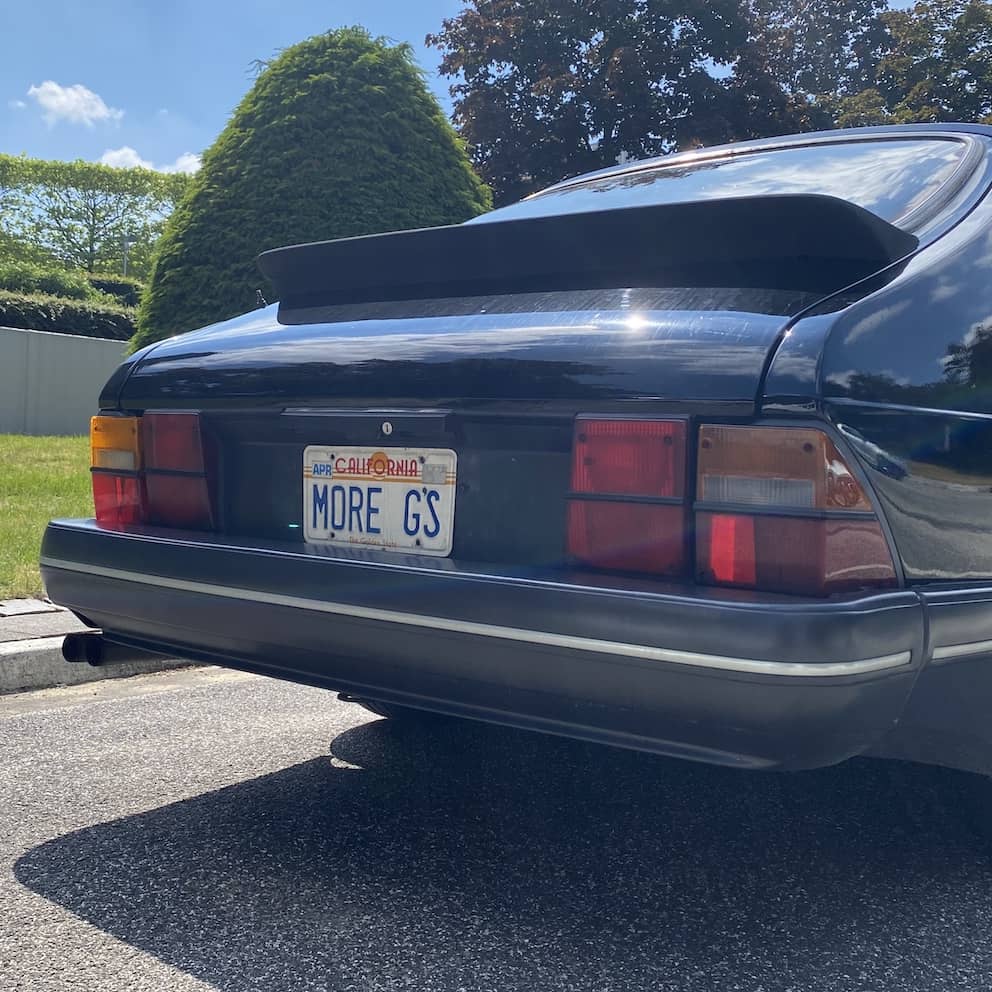
The 900 carried that DNA forward for years. Same basic idea, refined over time but never completely ironed out, which is exactly what makes it interesting today. A four-cylinder engine mounted backwards and at an angle, the transmission sitting underneath it, everything packaged in a way that feels almost defiant by modern standards. It’s not the obvious solution, but it’s the Saab solution. The one I have here is a 1990 900 SPG, or Aero, or 16S depending on where you’re from. Same car, different naming politics. In the US, Saab couldn’t use “Aero”, so it became SPG, Special Performance Group. In other markets, it carried different badges, but the idea stayed the same: this was the top version, the one that got a little bit more of everything.
And you do feel that.
This car has what’s often referred to as the “red box” from factory, bumping power from around 160 to 185 horsepower. On paper, that doesn’t sound dramatic, but that’s not really the point. What matters is how it delivers that power. With around 200,000 miles on the clock, it still put down about 179 horsepower at the wheels when tested, which, to me, says more about the engineering than any brochure ever could.
It’s not fast in a modern sense. It doesn’t try to be. But when the turbo spools up, there’s this very distinct moment where the car shifts character. It’s not linear, it’s not overly refined, it’s more like a reminder that there’s something mechanical happening underneath you. Something that builds, and then pushes. You don’t just drive it, you interact with it.
Of course, it shows its age. You see it, you feel it, and honestly, I wouldn’t want it any other way. A car like this shouldn’t feel new. It should feel like it has lived a bit, like it has stories to tell, even if you don’t know all of them.


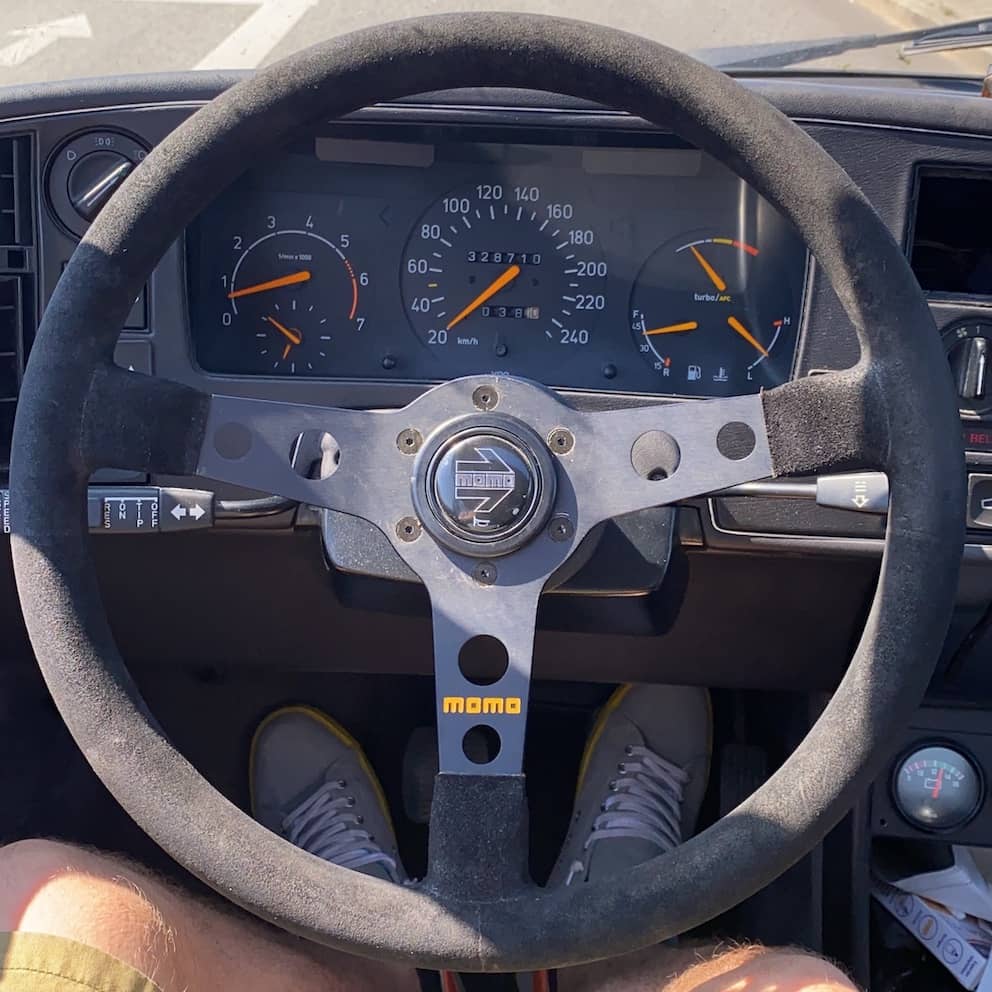
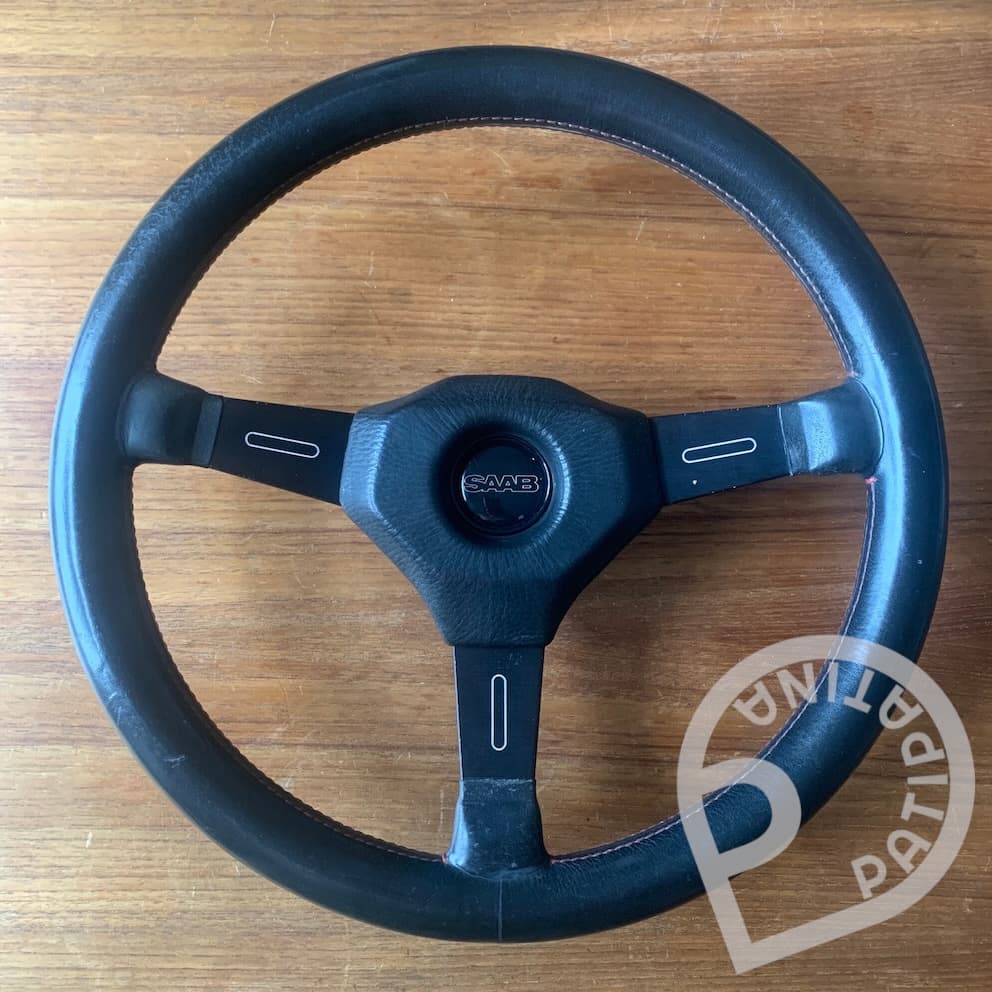
One thing I did change right away, though, was the steering wheel. I kept the original, of course, but it didn’t stay in the car. First thing I did was install a Momo hub and try a Momo wheel that was specifically made for Saab. It looked right, it felt right in a historical sense, but somehow it still wasn’t quite there.
So I swapped it again.
What I’m running now is a Momo Rally 2000 in suede, and that finally clicked. It’s a bit more raw, a bit more direct, and it just fits the way this car wants to be driven. Sometimes “period correct” is not the same as “personally right”.
At the end of the day, there are plenty of cars out there that are faster, cleaner or more valuable. But very few manage to feel this distinct. A bit unconventional, slightly stubborn, and completely unapologetic about it.
And every time the turbo kicks in, it reminds you of one simple thing.
This car was never meant to be normal.


| Cookie | Duration | Description |
|---|---|---|
| cookielawinfo-checkbox-analytics | 11 months | This cookie is set by GDPR Cookie Consent plugin. The cookie is used to store the user consent for the cookies in the category "Analytics". |
| cookielawinfo-checkbox-functional | 11 months | The cookie is set by GDPR cookie consent to record the user consent for the cookies in the category "Functional". |
| cookielawinfo-checkbox-necessary | 11 months | This cookie is set by GDPR Cookie Consent plugin. The cookies is used to store the user consent for the cookies in the category "Necessary". |
| cookielawinfo-checkbox-others | 11 months | This cookie is set by GDPR Cookie Consent plugin. The cookie is used to store the user consent for the cookies in the category "Other. |
| cookielawinfo-checkbox-performance | 11 months | This cookie is set by GDPR Cookie Consent plugin. The cookie is used to store the user consent for the cookies in the category "Performance". |
| viewed_cookie_policy | 11 months | The cookie is set by the GDPR Cookie Consent plugin and is used to store whether or not user has consented to the use of cookies. It does not store any personal data. |