Momo Indy – Complete History, Generations & Guide
The wooden steering wheel that defined early Momo identity.
by Mads – Last updated April 2026
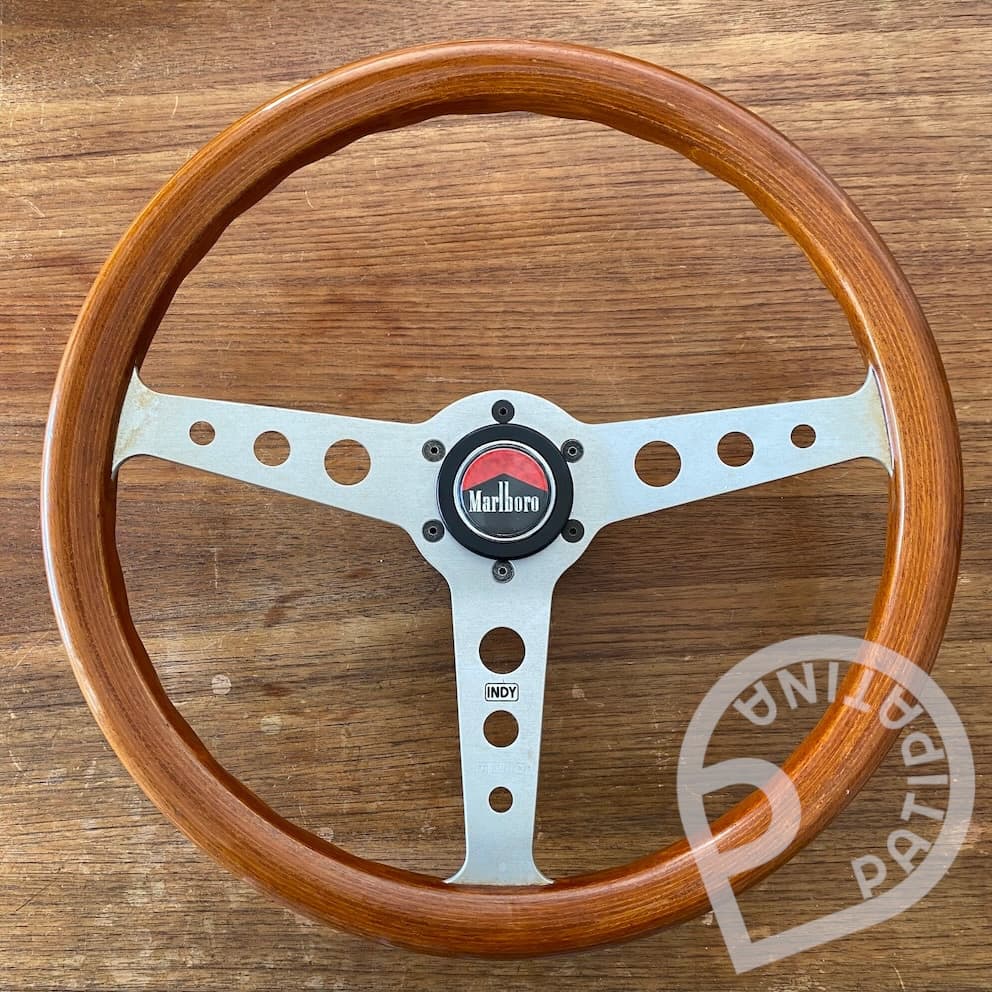
There are steering wheels.
And then there is the Momo Indy.
For many, it is the purest expression of early Momo design — a wooden steering wheel that connects the very beginning of the brand with the racing world it came from.
It is not a design that evolved to chase trends. It is a design that stayed close to its origin.
This guide brings structure into one of the earliest Momo families: generations, materials, markings, and the subtle changes that define what an Indy actually is.
Some links may be affiliate links. I may earn a small commission at no extra cost to you.
Why the Indy matters
The Momo Indy is one of the earliest steering wheel designs produced by Momo.
Its origins go back to the mid 1960s, a time when wooden steering wheels were still a dominant choice in motorsport and performance cars.
The earliest connection even traces back to pre-production Momo steering wheels used in Formula 1 applications.
That makes the Indy less of a “model evolution” and more of a foundation piece in Momo’s history.
First generation (circa 1966 – 1973)
The first generation Indy defines the original identity of the wheel.
It is characterized by simplicity and early production variability.
Key Identifier:
- Engraved “Indy” logo on center spoke
- Flat design
- Wooden rim with early profile geometry
- No standardized branding system
Common markings from this era:
- “12707 MOMO Made in Italy”
- “MOMO”
- “PAT. MOMO ITALY”
These variations reflect early production before full standardization.
Grip profile & construction
The first generation Indy introduced a very specific design language:
- flat structure
- wooden rim
- concave front edge on the grip
- finger grips on the back side
This grip profile is one of the defining characteristics of early Indy wheels and clearly separates it from later Momo wooden designs.
Materials & finishes
Early Indy wheels were typically available in:
- brushed aluminum spoke versions
- black anodized aluminum spoke versions
- wooden rim finishes in different tones
The wood was not uniform in appearance, and natural variation is part of the period production character.
Second generation (circa 1972 – 1977)
The second generation marks the transition into more structured production.
Key change:
The engraved “Indy” marking is replaced by a printed silkscreen logo on the spoke.
- Silver wheels → black print
- Black wheels → white print
This aligns the Indy visually with other Momo models of the same period.


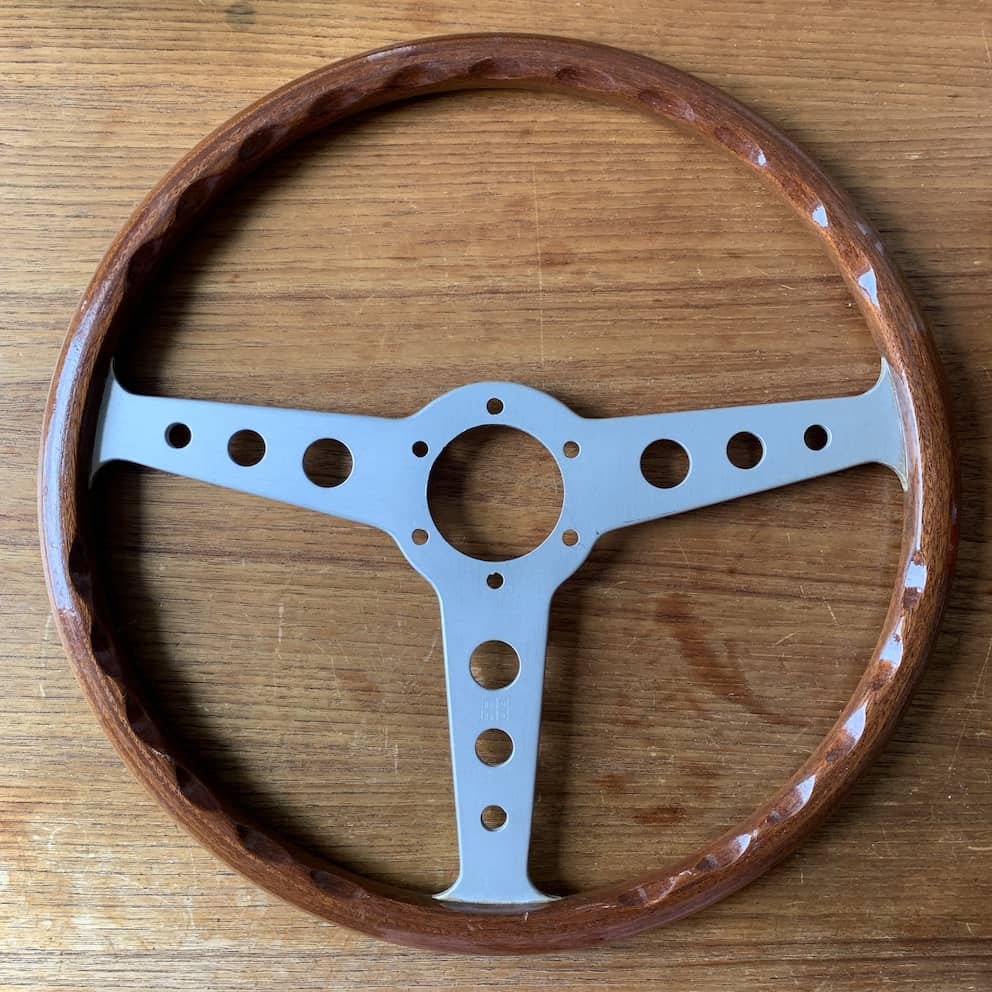

Backside markings
During this period, the back of the wheel becomes more important for identification:
- 1968–1973 → stacked MOMO logo
- 1974–1976 → “MADE IN ITALY” or “M20340”
Even identical-looking wheels can differ in construction depending on production batch.
Size variations
The second generation expanded available sizing:
- 320 mm
- 360 mm
- 370 mm (early production only)
All versions remained flat in this period.
Third generation (from around 1977)
The third generation introduces the most visible change in character.
The Indy becomes more refined and loses part of its early geometry identity.
Key changes:
- Flat versions phase out
- Semi-dish versions introduced
- Grip profile becomes round instead of concave
- Finger grips remain on the back
The earlier sharp personality of the wheel becomes more uniform.
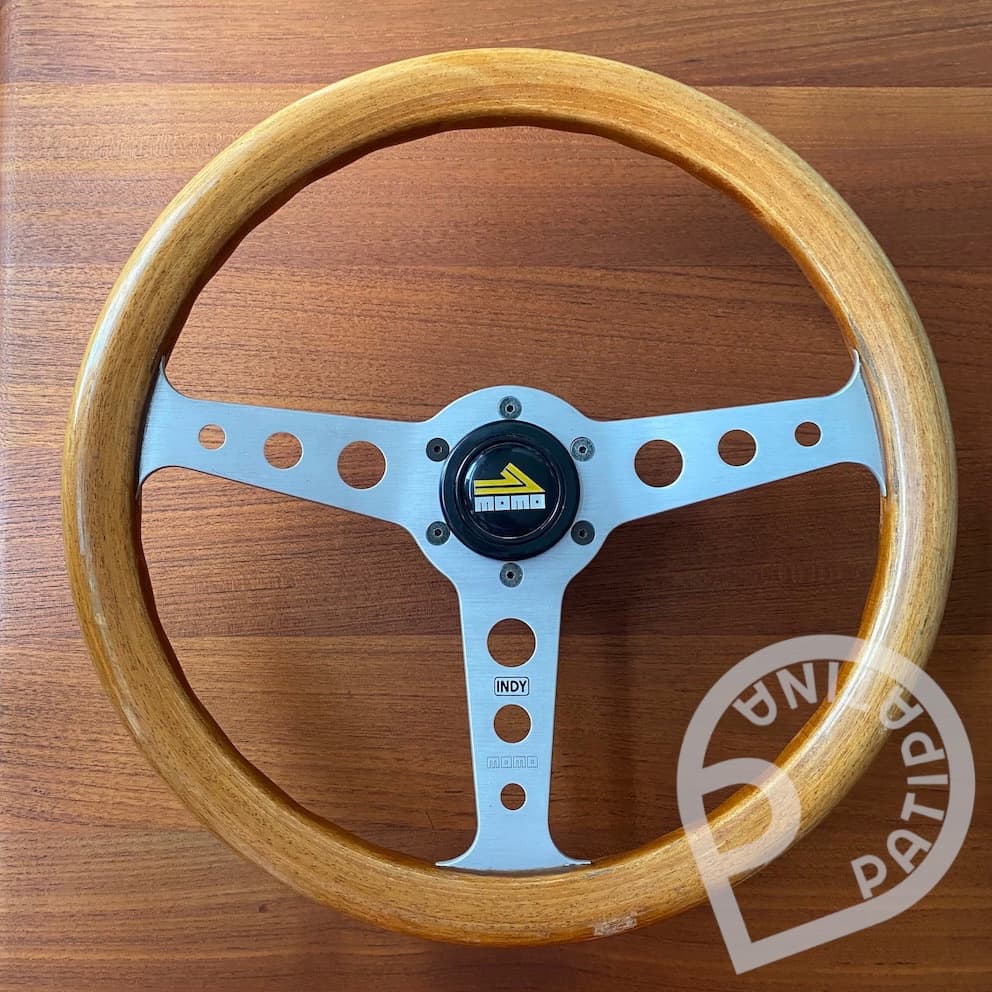
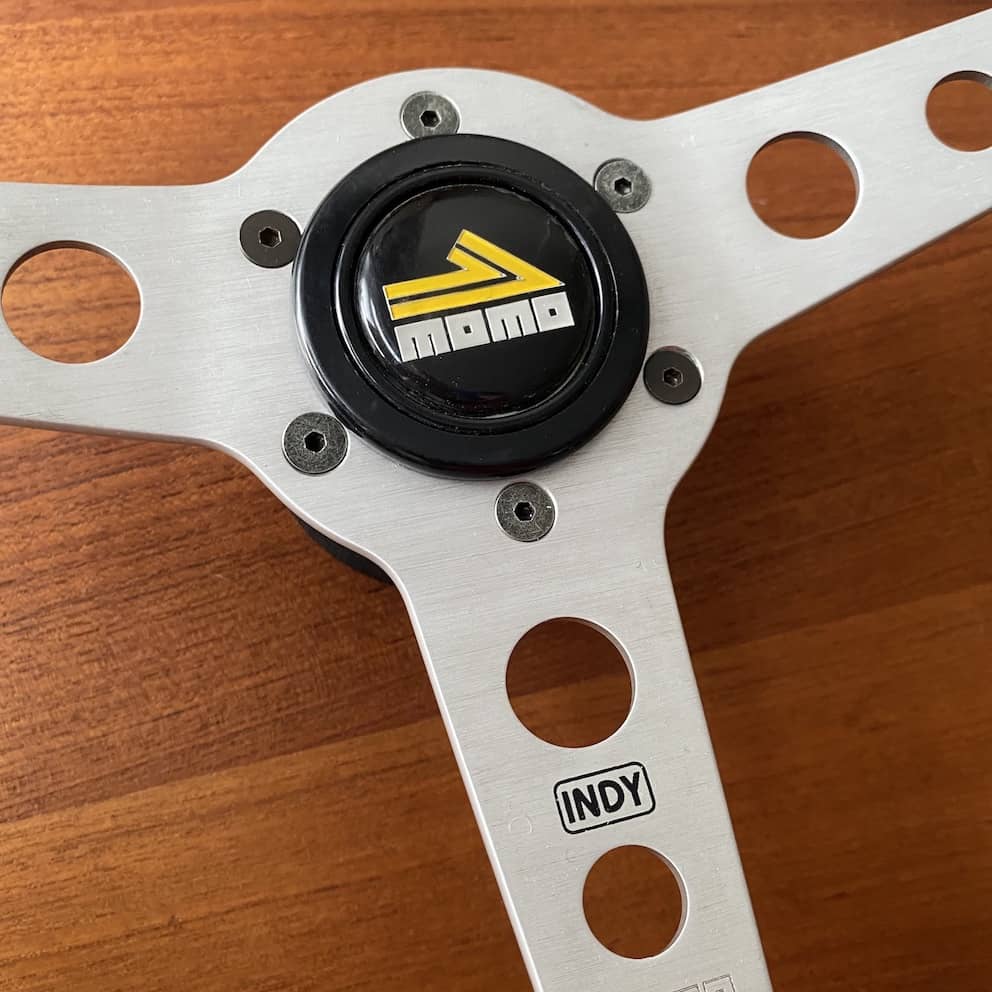
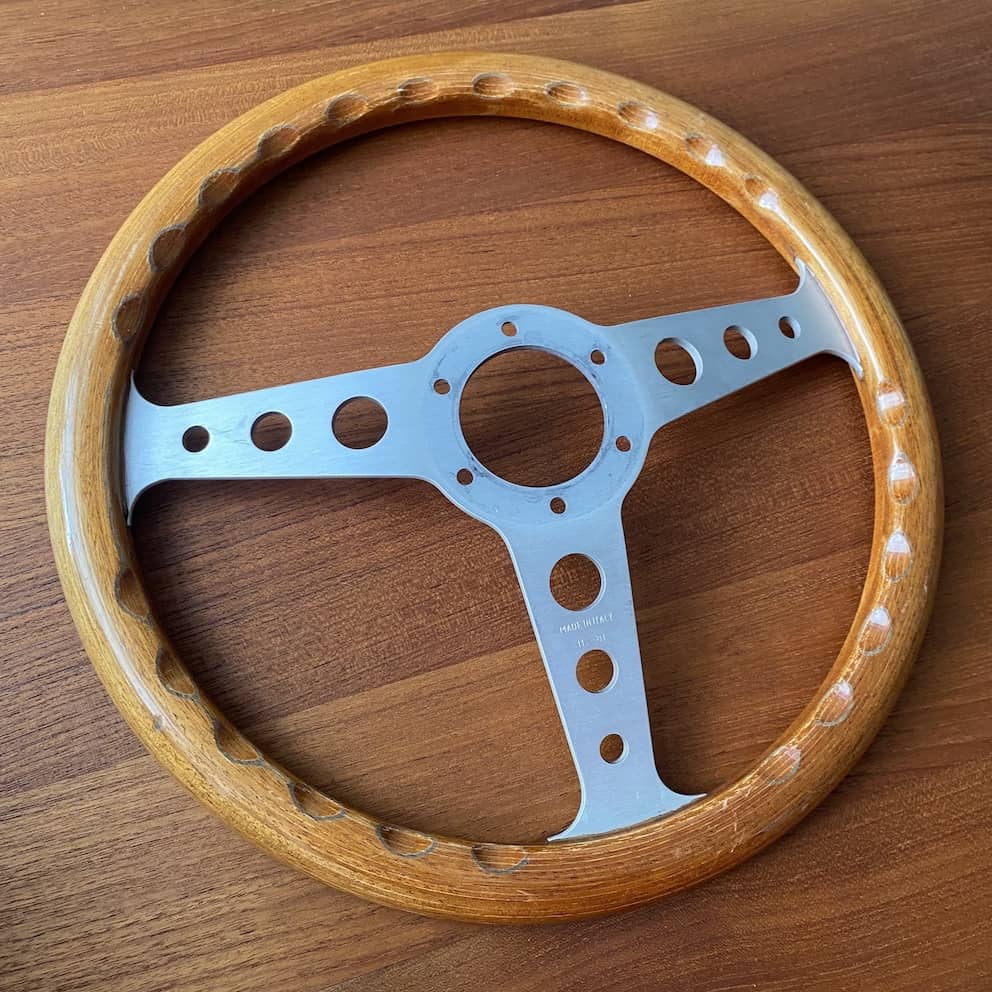
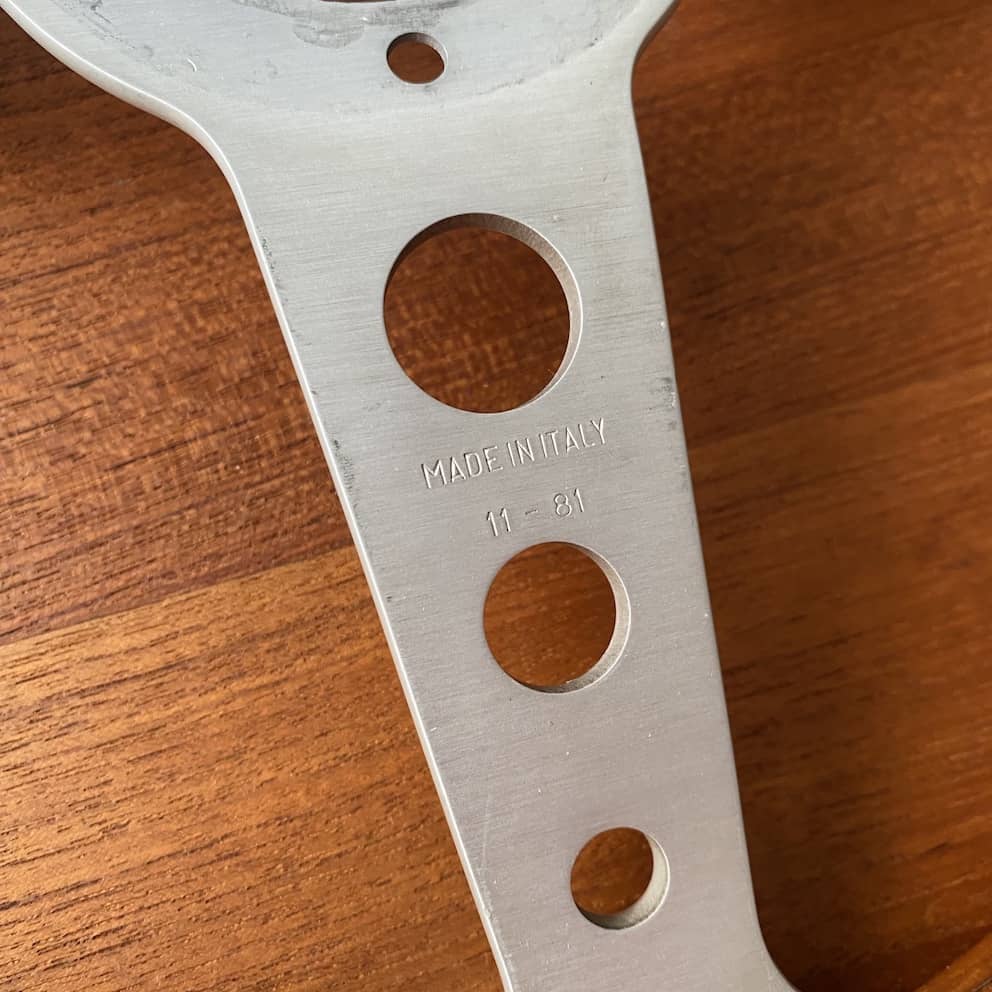
Some links may be affiliate links. I may earn a small commission at no extra cost to you.
Variants & special versions
Within the Indy family, several variations exist:
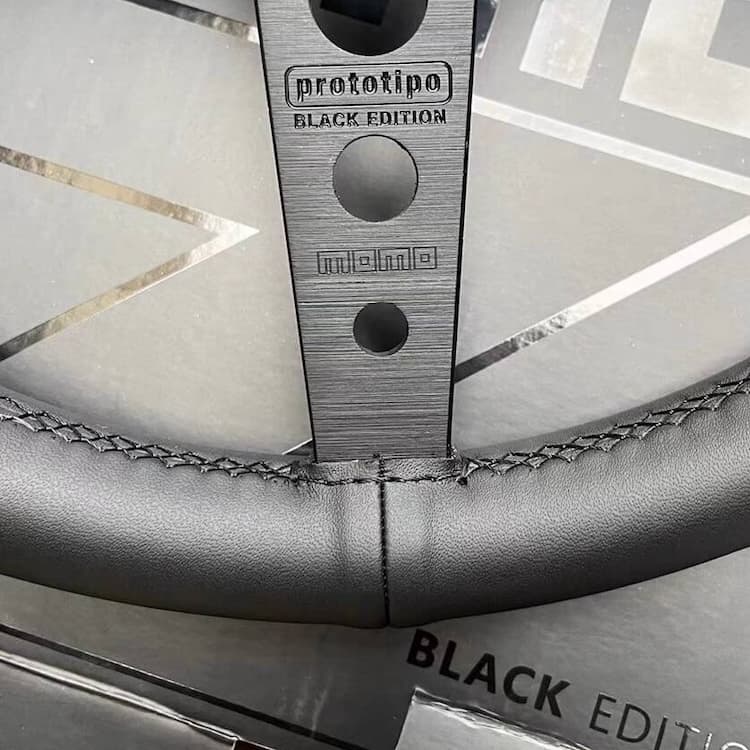
- polished spoke versions (“Super Indy”), engraved Indy Logo
- brushed aluminum variations
- black anodized limited production versions
- rare late-production 370 & 375 mm configurations
These variations often overlap between production phases.

Some links may be affiliate links. I may earn a small commission at no extra cost to you.
Why early Indy wheels are so desirable
It is not just age.
It is evolution clarity.
Early wheels carry:
- unique grip geometry
- inconsistent early markings
- direct links to racing-era production
- material aging that defines their identity
Later wheels are more standardized — but less raw in character.
Finding an original Indy
When searching for an original Indy, condition is critical.
Wooden rims from early production often show:
- surface cracking
- lacquer aging
- structural dryness due to temperature changes
Originality is often visible in imperfections as much as in markings.
Final Thought
The Momo Indy is not just a wooden steering wheel.
It is the starting point of a design language that would later define Momo as a brand.
Depending on the generation, it shifts between raw racing tool and refined classic component — but never loses its connection to its origins.
Understanding it is less about details alone
and more about recognizing its evolution over time.