A small object that quietly shaped how speed started to look.
by Mads – September 21, 2019
The Talbot Berlin mirror is one of them.
Not because it’s rare.
Not because it’s expensive.
But because it quietly shaped how a “sports mirror” is supposed to look — across brands, decades, and completely different cars.
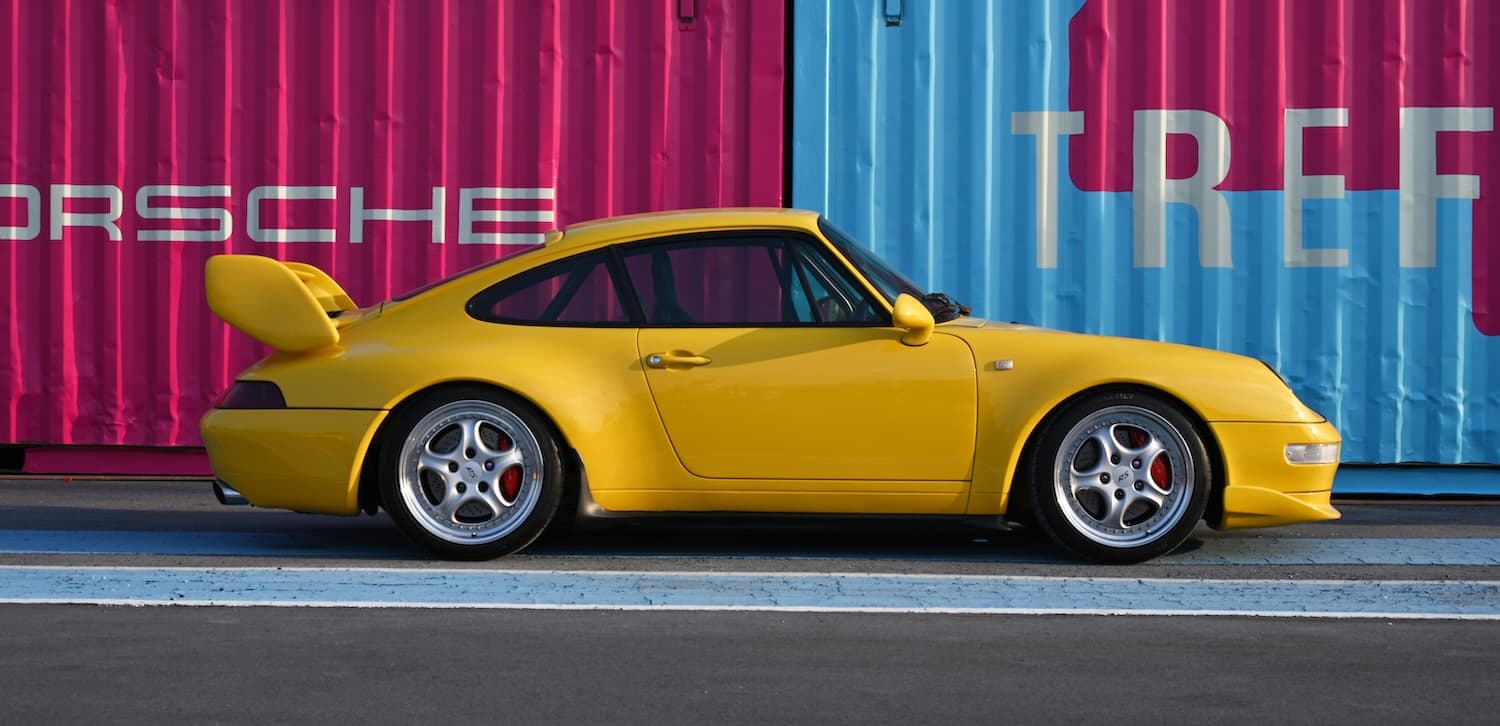
Porsche. BMW. Jaguar. Mercedes.
Different cars. Same silhouette.
Long before “heritage design” became a marketing phrase, the Talbot mirror was already there.
Mounted on fenders.
Sitting slightly too far forward.
Doing its job — and somehow becoming part of the car’s identity.
It wasn’t added to look good.
It just… did.


The bullet shape wasn’t retro.
It wasn’t nostalgic.
It was aerodynamic thinking — translated into something visible.
Low drag. Minimal surface. Clean form.
Whether buyers cared about drag coefficients back then doesn’t matter.
They saw speed.
And that was enough.
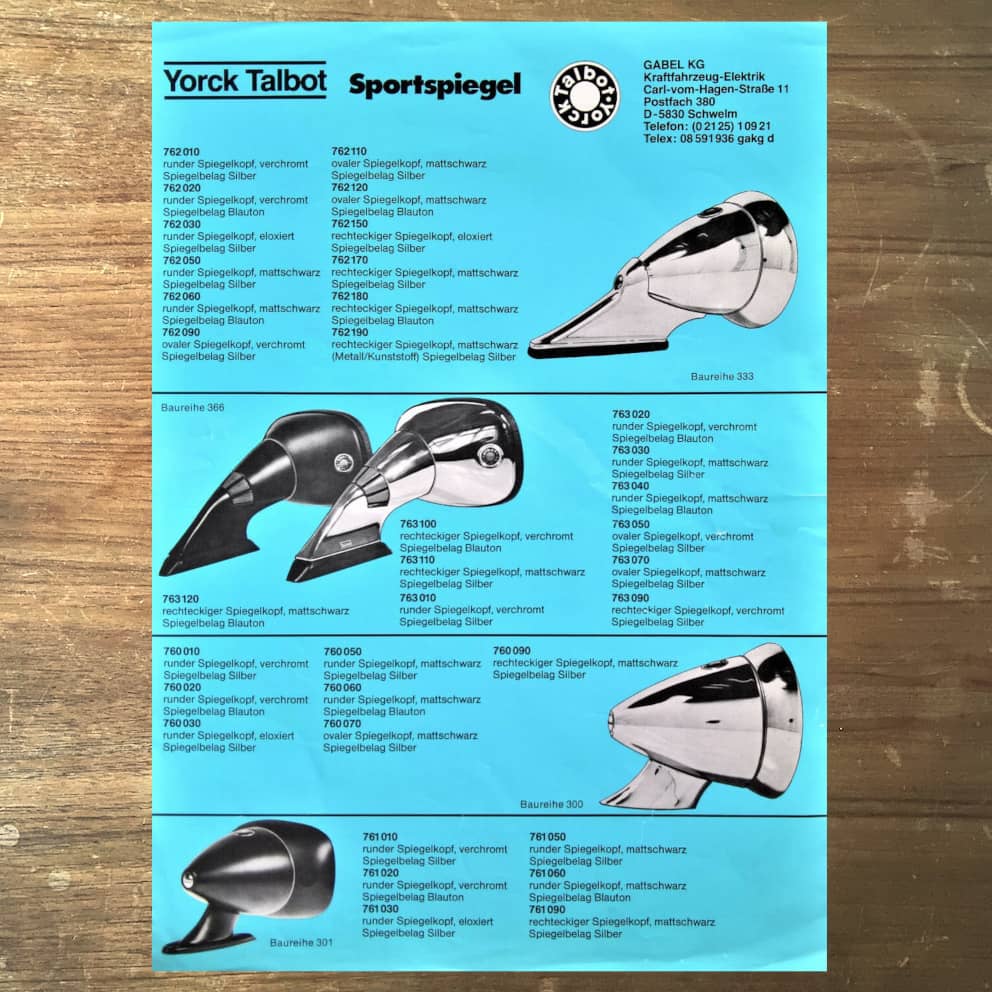
Before the Talbot 300, there was the “Gooseneck” mirror.
Elegant — but problematic.
Too exposed.
Too easy to damage.
Too easy to steal.
By the mid-1950s, regulations required cars to have proper exterior mirrors.
Mercedes needed a solution for the 300 SL Roadster.
Talbot delivered it.
The Talbot 300 was born.
And it worked.
Immediately.
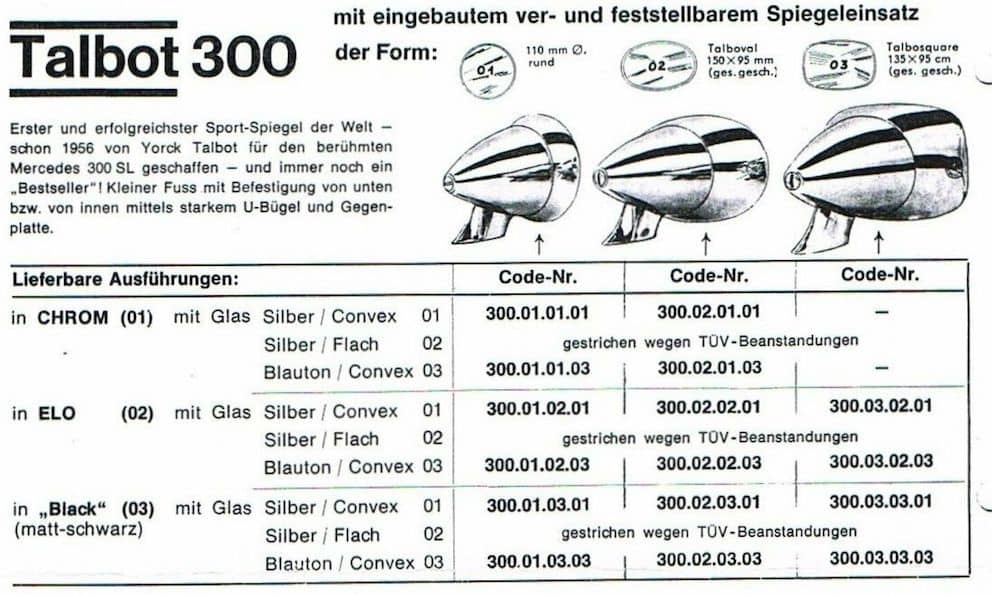
Once the first cars hit the road, other manufacturers noticed.
Quickly.
What started as a solution for Mercedes became a universal upgrade:
Porsche drivers added them.
BMW followed.
Jaguar too.
Not because they had to.
Because it looked right.
At first glance, they all look the same.
They’re not.
Same mirror.
Different details.
And that’s where most people get it wrong.
Porsche didn’t invent the mirror.
But Porsche made it stick.
356 owners started mounting Talbot mirrors early on.
Not factory — just better.
Eventually, Porsche added them as official options:
Back then? Around 21.50 DM.
As a Porsche option? Roughly double.
Nothing changed.
Except the price.
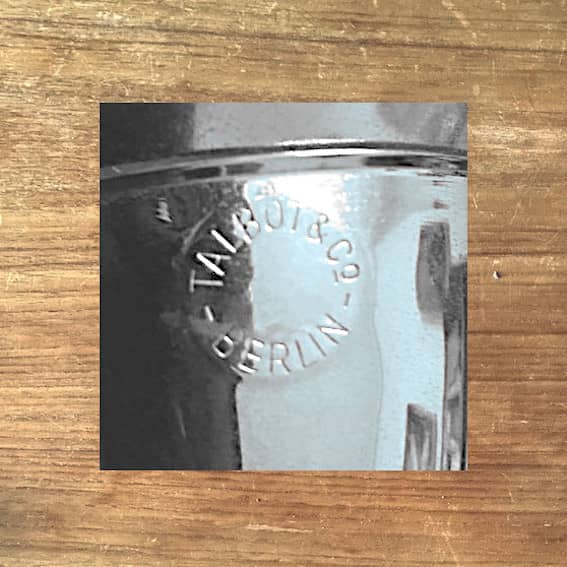
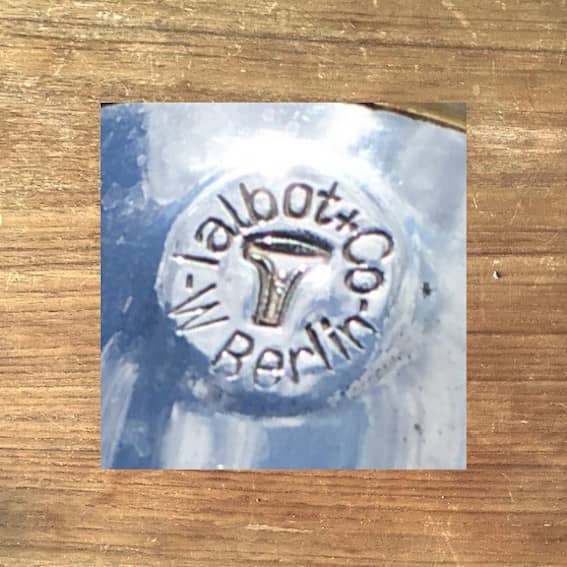
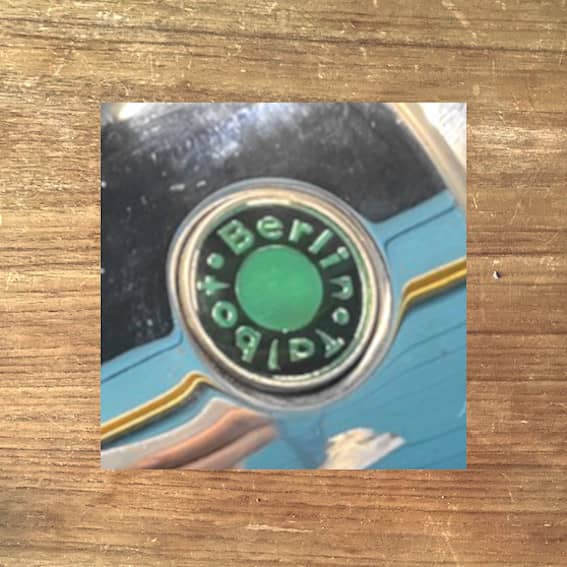
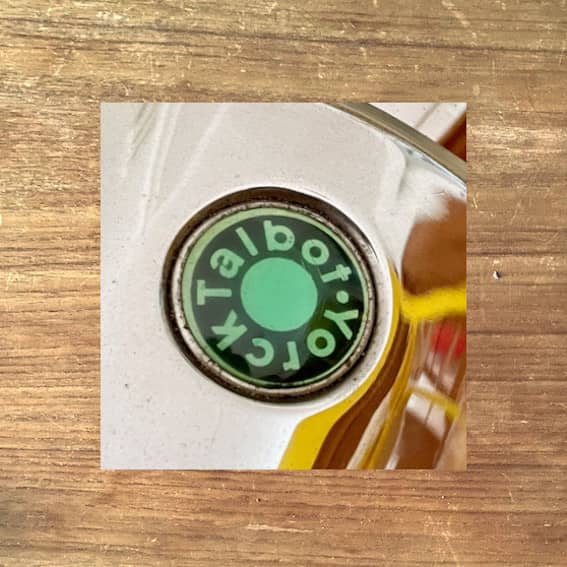
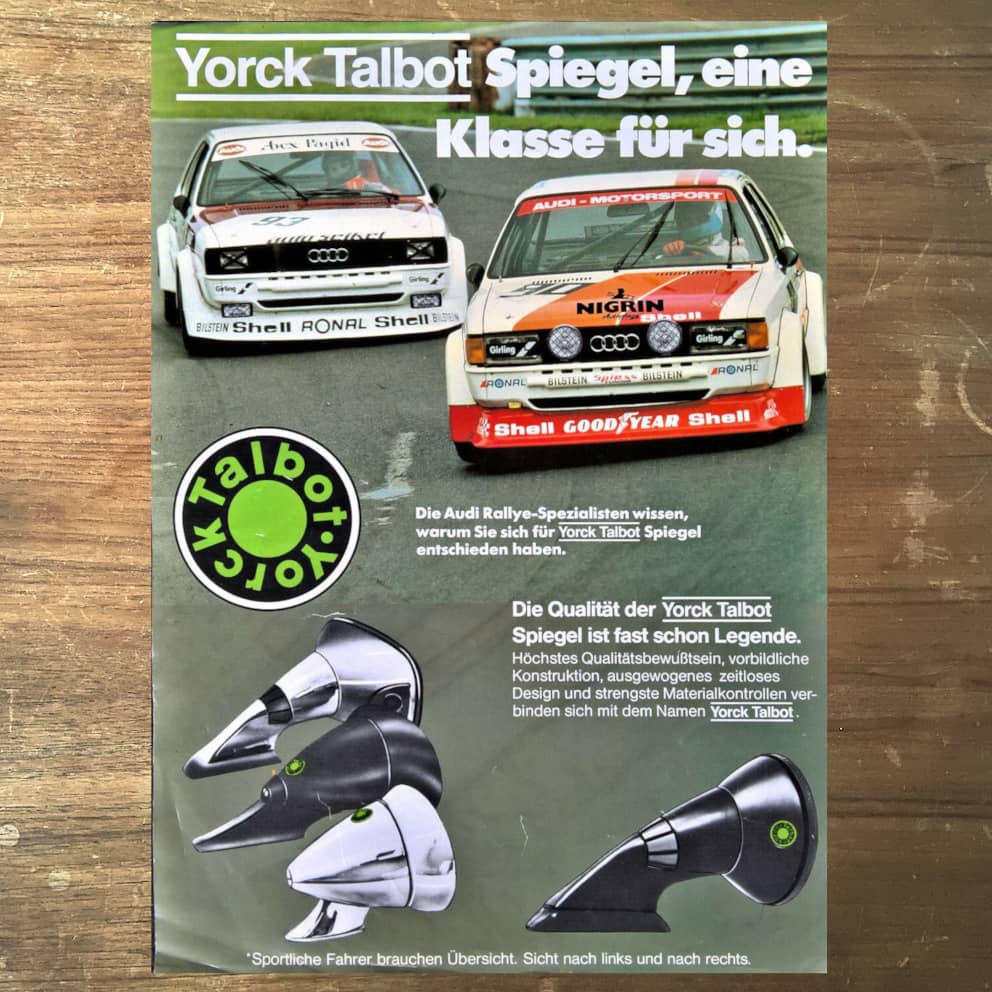
This is where things get interesting.
And where most myths start.
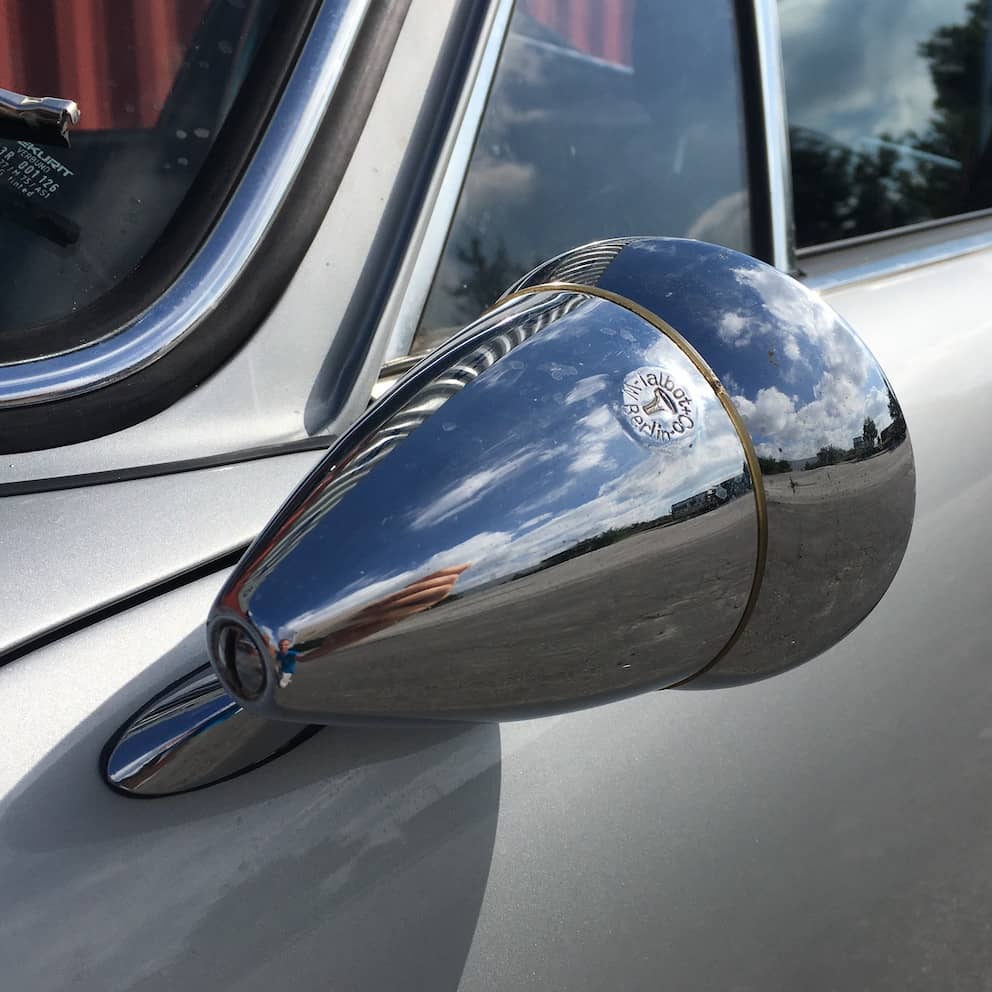
The earliest version.
Simple. Circular. All caps.
Not a design choice.
A political one.
After the Berlin Wall (1961), “W. Berlin” made a statement:
This product is from West Berlin.
Not later. Not after reunification.
Before.
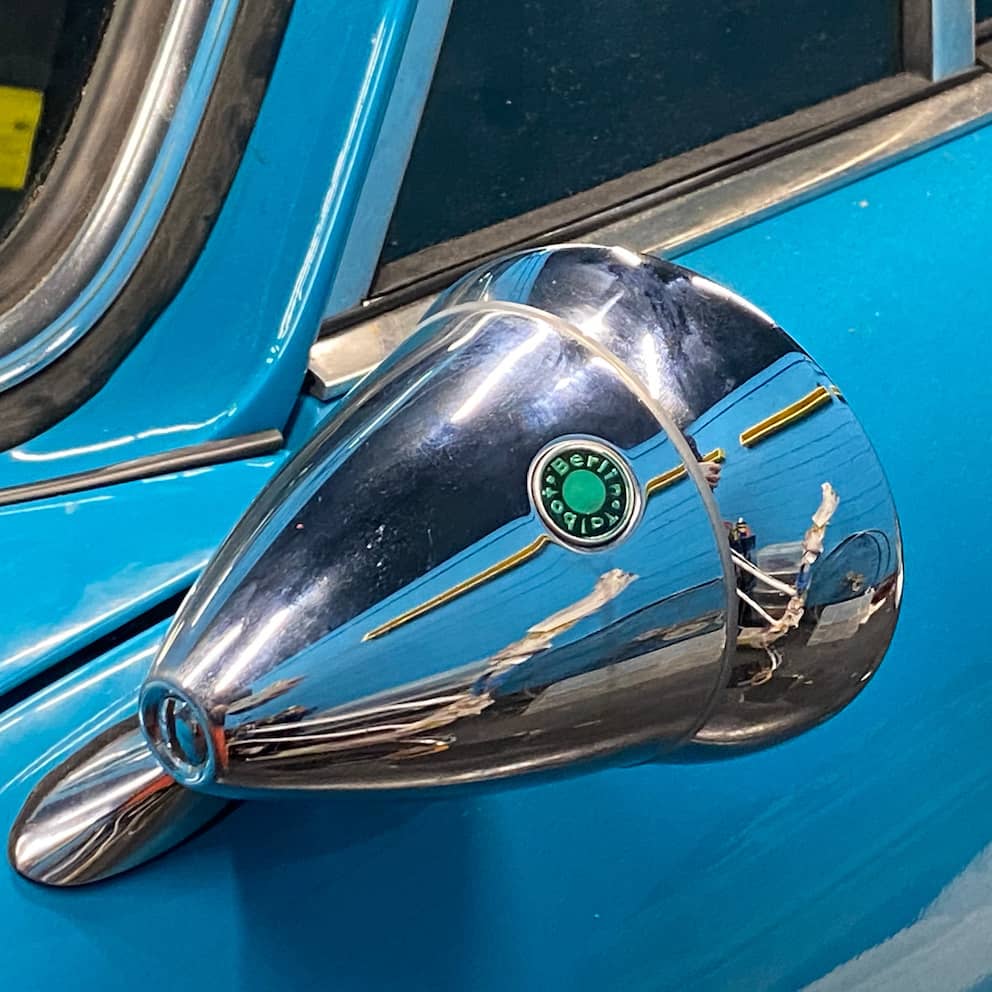
The most recognizable version.
The green dot becomes the identity.
Clean. Confident. Final.
After the sale of the company.
Same DNA — different ownership.
Most people don’t know the difference.
Collectors do.
If you’re looking for one, forget the stories for a second.
Look at:
There’s no single “best” version.
Only the one that fits your car —
and your idea of it.
It’s easy to dismiss it.
Small part. Simple function.
But that’s the point.
Some parts don’t need attention to define a car.
They just need to be right.
It’s just a mirror.
Until you realise
it isn’t.


| Cookie | Duration | Description |
|---|---|---|
| cookielawinfo-checkbox-analytics | 11 months | This cookie is set by GDPR Cookie Consent plugin. The cookie is used to store the user consent for the cookies in the category "Analytics". |
| cookielawinfo-checkbox-functional | 11 months | The cookie is set by GDPR cookie consent to record the user consent for the cookies in the category "Functional". |
| cookielawinfo-checkbox-necessary | 11 months | This cookie is set by GDPR Cookie Consent plugin. The cookies is used to store the user consent for the cookies in the category "Necessary". |
| cookielawinfo-checkbox-others | 11 months | This cookie is set by GDPR Cookie Consent plugin. The cookie is used to store the user consent for the cookies in the category "Other. |
| cookielawinfo-checkbox-performance | 11 months | This cookie is set by GDPR Cookie Consent plugin. The cookie is used to store the user consent for the cookies in the category "Performance". |
| viewed_cookie_policy | 11 months | The cookie is set by the GDPR Cookie Consent plugin and is used to store whether or not user has consented to the use of cookies. It does not store any personal data. |